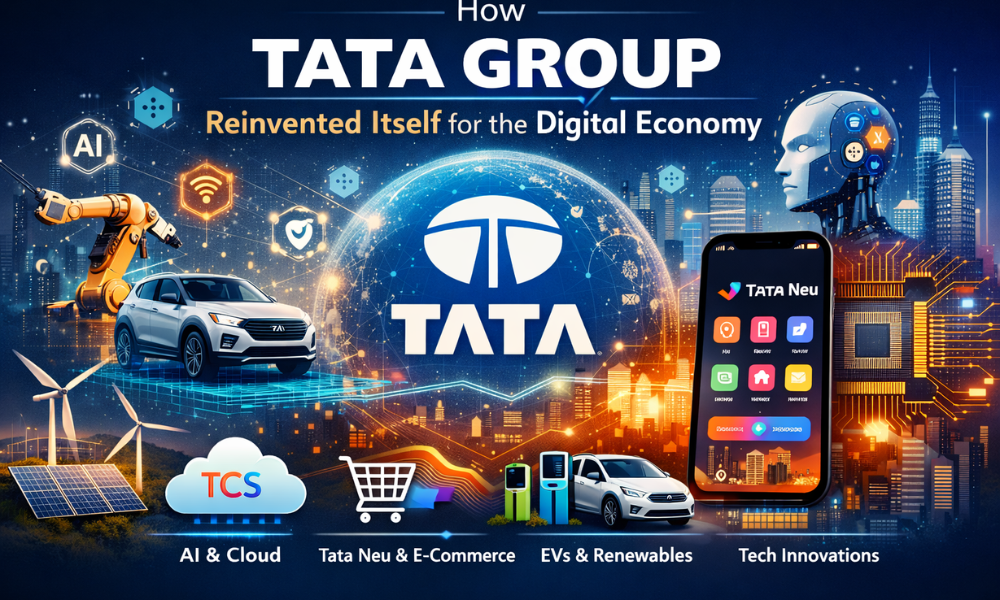
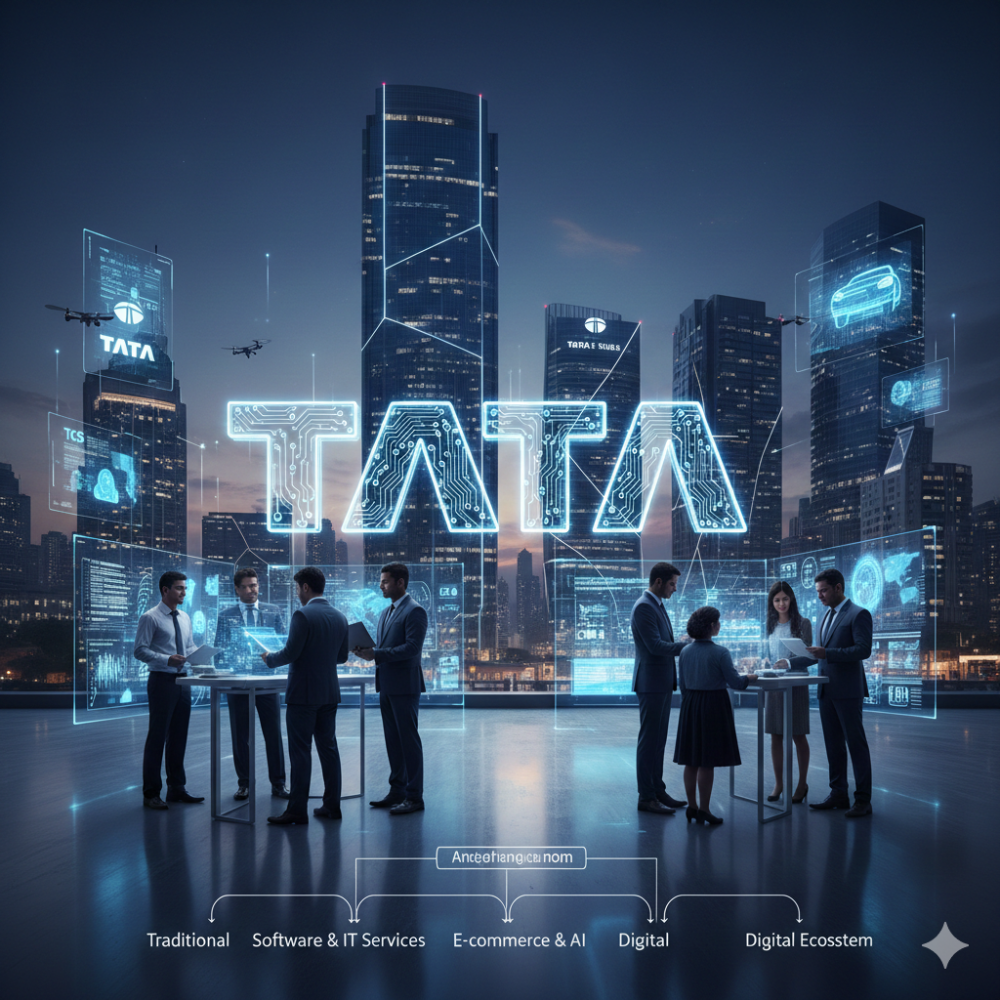
In the current era of digital disruption, in which the fundamentals of doing business are being rewritten, even traditional conglomerates are being forced to change in order to remain contemporary. Tata Group, which is one of the oldest and most admired business conglomerates in India, is embracing the digital economy in a big way – through its strategies, adoption of technology, and innovations that are consumer-centric. By changing the way Tata Group does business, the group is not only fortifying its businesses, which are already strong, but is also poised to become the leader among the digital giants of the world.
Digital Transformation at Fundamental Tata Businesses
Tata Group’s “legacy” operations, which include Tata Motors, Tata Steel, and Tata Power, have undergone extensive transformation. They have adopted various digital technologies in order to remain competitive in the rapidly growing global economy. These organizations have optimized production and decreased operational costs and increased productivity through the help of technology such as AI, IoT, and data analytics. Specifically, Tata motors have adopted “Connected Vehicle Technology and Predictive Maintenance for Improved Efficiency,” while Tata Steel has adopted “AI-powered Supply Chain Management for Faster and Smarter Decisions.” Tata Power has adopted “Smart Grid and Digital Energy Management Dashboard for Optimal Energy Distribution and Sustainability.” However, it’s not only operational processes that have been optimized through the help of technology, as it has also increased customer experience, including “Online Vehicle Booking and Real-time Service Monitor,” which shows that Tata Group is making extensive use of technology, not only to remain competitive but also to enhance its operations and stay ahead of the curve.
TCS: The Digital Infrastructure of the Tata Group
Tata Consultancy Services is the flagship company of the Tata Group and has been instrumental in the digital evolution of the group. As one of the largest IT services firms in the world, TCS has brought cloud computing, AI-based analytics, cyber security and business applications to many Tata firms globally. TCS not only supports other Tata businesses in their technology needs, but also sells services to customers around the globe, allowing TCS to gain revenue and develop expertise simultaneously. Also, TCS has developed automated systems, digital customer engagement platforms and next-generation IT infrastructures which enable Tata companies to be more agile and more efficient. Additionally, by researching AI, blockchain and IoT, TCS has been able to provide strategic advice to Tata for its future ventures by bridging the gap between concept and implementation. In its role as both a technology supplier and an innovation incubator, TCS keeps Tata Group at the leading edge of the digital economy while providing exceptional operational performance across a variety of industries.
Building Digital-First Consumer Platforms & Brands
Tata Group is investing in business opportunities that leverage consumer trends toward digital channels and began creating digital-first platforms as part of a strategy to take advantage of this trend. Tata Neu, the company’s new super app, brings together all the components of retail, travel, finance, and loyalty services into one platform, which is the first step of this strategy. Tata Neu will allow consumers to conduct business with Tata in a more convenient way. The company has also invested heavily into eCommerce and now offers multiple online retail platforms, fintech platforms, and digital payment solutions that will enable seamless interaction with tech-savvy consumers. Utilizing influencer marketing, AI-powered personalization services, and extensive data analytics to understand customers’ needs, Tata Neu will enable Tata to create tailored solutions for its customers’ needs. In addition, Tata’s new digital-first strategy will provide Tata with opportunities to generate sales through multipoint sales platforms, thereby allowing Tata to strengthen its brand loyalty to customers while competing effectively against all the new-age digital competitors entering the marketplace.
Strategic Acquisitions, Investments & Future Tech Initiatives
In an effort to provide a solid platform to build its Digital Future, Tata Group has demonstrated its commitment through a variety of Strategic Acquisitions, Strategic Investments and Future Technology initiatives.
The Tata Group has invested in many start-ups within the Fintech, E-Mobility, Artificial Intelligence (AI), and Renewable Energy sectors, which will enable it to quickly gain entry into some of the fastest growing global markets. Through the acquisition of companies such as OneAssist and through the investment of minority stakes in Electric Vehicles (EV) and Semiconductor companies, the Tata Group has expanded its technology base.
The Tata Group is strategically investing in technologies that will create a long-term sustainable competitive advantage, such as Electric Vehicles, Next Generation Batteries, Smart Grids and Artificial Intelligence Applications, while simultaneously allowing for diverse revenue streams and minimizing the risk of disruption to its core businesses. By investing in the future of technology and aligning with like-minded companies through Strategic Partners and Investment Strategies, Tata Group is positioning itself as a progressive conglomerate poised to compete in the Digital Economy and successfully protect its rich legacy.

Tata Group’s foray into the digital economy is one such example of how, even after 100 years of existence, giant conglomerates can renew themselves through technology, innovation, and visionary thinking. By integrating and renewing its operations, harnessing the power of TCS as the “Digital Powerhouse,” and using innovative methods such as focusing on customer-centric platforms and exploring “Future Technologies,” Tata Group has not only further sharpened its competitive advantage but also positioned itself for the future. Tata Group’s transformation shows that it is mandatory, rather than optional, for organizations and businesses to align themselves with the digitized age and its “Rapid Rate of Change.”