Technology Transforming Agriculture
Modern agriculture in Gujarat increasingly relies on technology to improve efficiency and decision-making. Digital tools and scientific research are helping farmers maximize productivity while minimizing production costs.
Technological advancements include:
- Soil health cards
- Weather forecasting services
- Mobile agricultural advisory platforms
- Precision farming techniques
- Mechanized harvesting equipment
- Improved seed varieties
- Pest surveillance systems
- Drone-assisted monitoring in selected areas
Access to timely information allows farmers to make informed decisions regarding irrigation, fertilization, pest control, and harvesting schedules.
Strengthening Agricultural Exports
Gujarat has emerged as an important exporter of horticultural products. Fresh fruits, vegetables, spices, dehydrated products, and processed food items from the state are supplied to international markets across Asia, Europe, the Middle East, and Africa.
Investments in modern logistics, grading centers, quality certification, packaging facilities, and cold-chain infrastructure have improved export competitiveness. These developments create better income opportunities for farmers while strengthening India’s position in global agricultural trade.
Promoting Sustainable Farming
Sustainability has become a key pillar of Gujarat’s agricultural strategy. Farmers are increasingly adopting environmentally responsible farming methods that protect soil fertility, conserve biodiversity, and reduce dependence on chemical inputs.
Popular sustainable practices include:
- Organic farming
- Integrated nutrient management
- Integrated pest management
- Vermicomposting
- Rainwater harvesting
- Crop diversification
- Mulching
- Biofertilizer application
- Renewable energy-powered irrigation
These approaches help ensure long-term agricultural productivity while preserving natural resources for future generations.
Empowering Rural Communities
The growth of horticulture has generated employment opportunities throughout Gujarat’s rural economy. Beyond farming, new jobs have emerged in food processing, transportation, packaging, cold storage, grading, warehousing, and agricultural marketing.
Farmer Producer Organizations (FPOs), self-help groups, and agricultural cooperatives have strengthened collective marketing and improved farmers’ bargaining power. Women and young entrepreneurs are also actively participating in horticulture-based enterprises, contributing to rural economic development.
Research and Innovation
Agricultural universities and research institutions continue to play a crucial role in Gujarat’s success. Scientists regularly develop improved crop varieties capable of producing higher yields while offering resistance to pests, diseases, and changing climatic conditions.
Research efforts focus on:
- Climate-resilient agriculture
- Improved irrigation systems
- High-yield crop varieties
- Disease management
- Post-harvest technologies
- Food processing innovations
- Precision agriculture
The close partnership between researchers and farmers ensures that scientific innovations reach agricultural fields quickly and effectively.
Climate-Resilient Agriculture
Climate change presents new challenges for agriculture, making resilience an important priority. Gujarat has encouraged farmers to adopt farming systems that can withstand changing rainfall patterns, rising temperatures, and water scarcity.
Diversified cropping systems, drought-tolerant varieties, efficient irrigation technologies, and scientific crop management practices help farmers reduce climate-related risks while maintaining stable production.
National Recognition in New Delhi
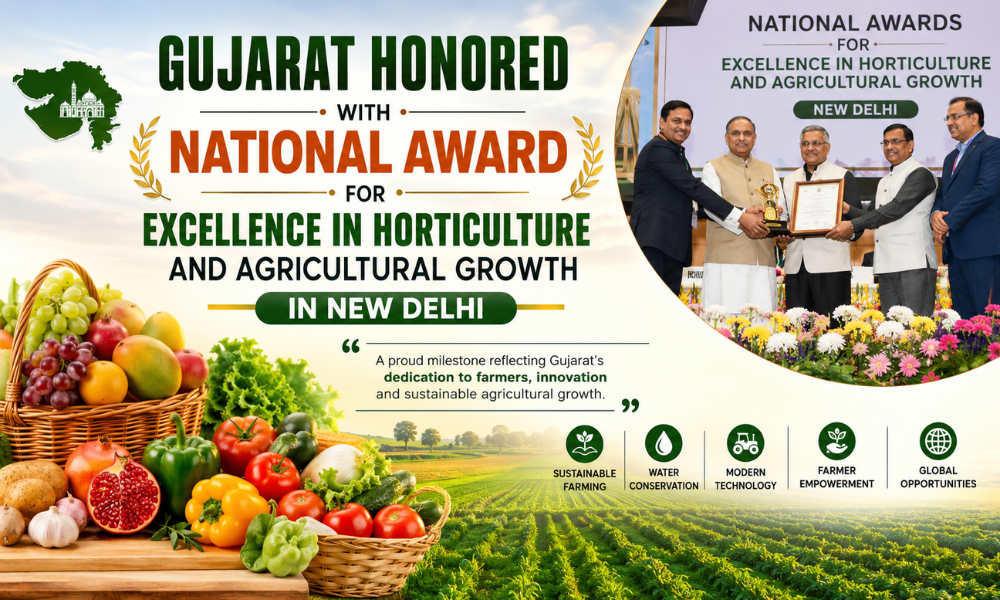
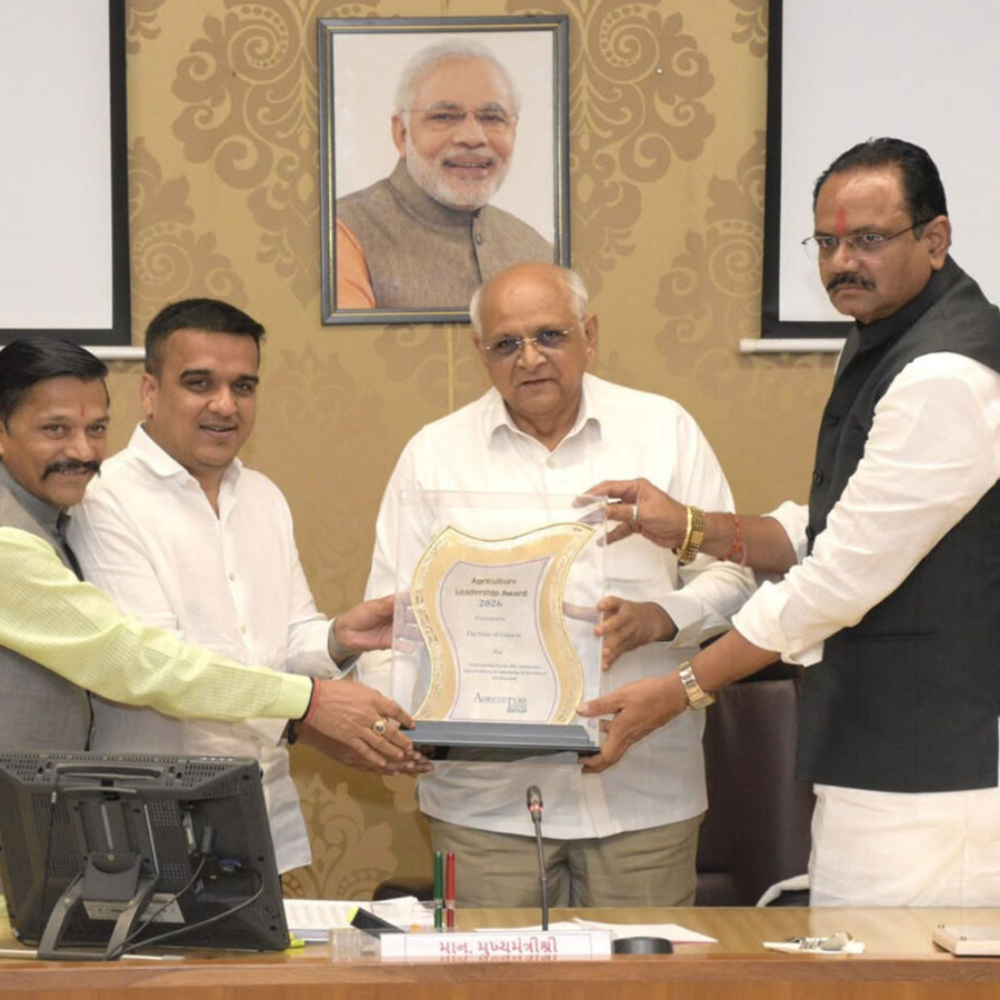
Receiving the prestigious national award in New Delhi symbolizes Gujarat’s growing leadership in Indian agriculture. The recognition honors the combined efforts of farmers, agricultural scientists, government departments, extension officers, cooperatives, and policymakers who have worked together to improve agricultural productivity and sustainability.
The award also serves as an inspiration for other states to adopt innovative farming practices that balance productivity with environmental conservation.
Looking Ahead
Gujarat plans to continue expanding its horticulture sector by encouraging digital agriculture, precision farming, food processing industries, export-oriented production, and value-added agricultural products. Future investments in infrastructure, research, farmer education, and market development will further strengthen the state’s agricultural ecosystem.
The focus will remain on increasing farmer incomes, promoting sustainable cultivation, reducing post-harvest losses, and creating greater employment opportunities in rural areas.