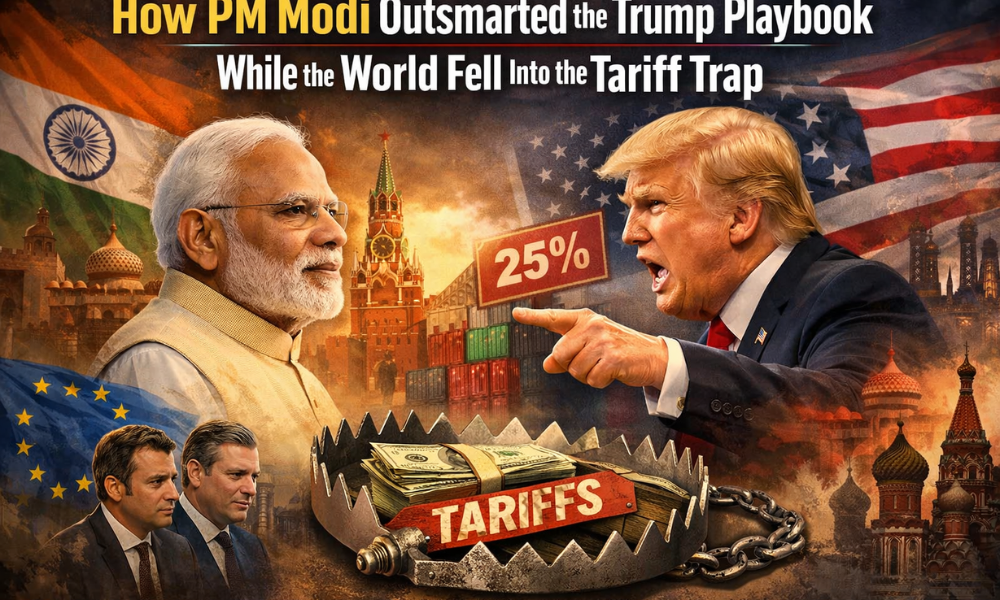
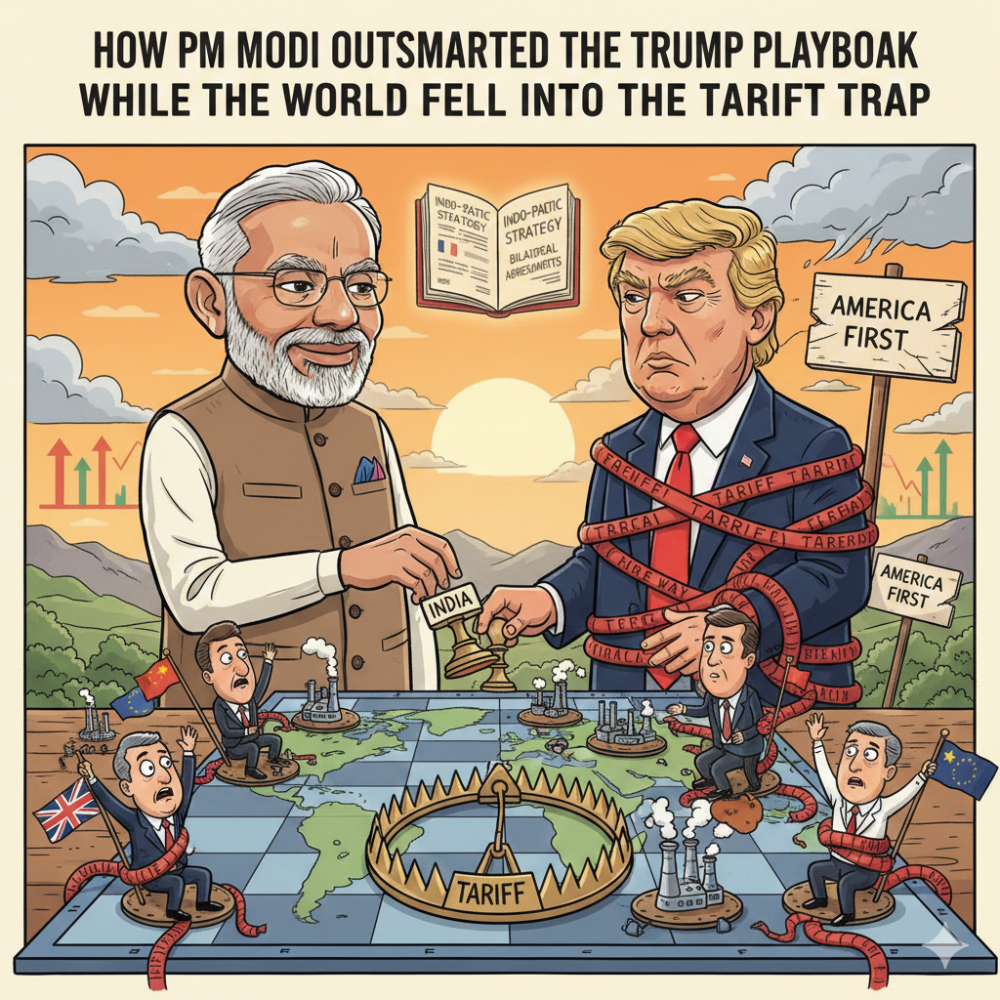
While the tariffs spouted by Donald Trump caught the attention of Europe, America, and its best friends by surprise, one country took a very different approach. Prime Minister Narendra Modi understood the transactional approach of Trump very early, and instead of being cornered, rattled, or impressed, Modi chose to keep mum, keep calm, and carry on. While every country had to learn the painful truth that a trade agreement and friendship meant nothing under Trump, India simply chose to survive—and learn the art of dealing with the most unpredictable deal-maker in the world.
Trump’s Erratic Diplomacy and the Illusion of Protection by Allies
The term “diplomacy” has been made meaningless by Donald Trump’s methods of conducting overseas relations, as it has time and again revealed how easily alliances formed through good faith and treaties can be broken. The Europeans learned this through experience, as Emmanuel Macron, NATO head Mark Rutte, and even British Prime Minister Keir Starmer found themselves publicly disrespected and threatened with tariffs despite appearing so friendly with Trump. Trump’s desire to share his phone conversations and make threats of force, even for something as inconsequential as Greenland, made it clear that friendship does not protect a nation’s interests when it comes to being forced into concessions. Even having a trade treaty with both the European Union and Britain has not protected these nations yet from having substantial tariffs forced upon them. Where tariffs are concerned, Trump seems less interested in economic gain and more interested in using this as a bargaining chip with which he can strong-arm concessions and assert this dominance. The reaction of the Europeans, at least at first, has made it clear how unprepared even allies have been for a Trump worldview so profoundly transactional and short-sighted.
India employed a strategy of Non-Confrontation against intense pressure from Trump.
India was under intense pressure from Trump very early during an aggressive period in which he used tariff threats over a variety of items as tools of coercion. Despite the imposition, at times as high as 50 percent, of tariffs against India, India took a restrained, nonpublic approach to Trump’s attacks; however, the open confrontation began after Trump incorrectly stated that he successfully prevented an India-Pakistan conflict by threatening to impose tariffs. India rejected outright Trump’s assertion that he intervened to prevent conflict, but India reacted in a calm and reasonable manner. In the meantime, Pakistan appeared to welcome Trump’s mediation and flattery. An extremely awkward phone call on 17 June 2019 began to highlight critical differences between India and Pakistan, as the PM of India, Modi, unequivocally stated that the ceasefire that was in place was the result of direct communication between the parties, and India would not be the recipient of a Nobel Peace Prize nomination from Trump. As expected from previous experience, tariffs against India were significantly increased when compared to those levelled against Pakistan. Despite this heightened pressure on India, however, India remained firm and did not personalise the matter. By taking a disciplined approach to this issue, India has demonstrated its capacity to maintain dignity and prestige while managing a situation that is both unpredictable and under significant pressure from the United States president.
India Did Not Agree to a Hasty Trade Deal Because of the Tariff Situation and the Daily Attacks
Indian government officials have not given in to what was perceived as a rushed and unequal process regarding negotiations for a potential trade agreement with the United States. With the US’s tariffs hurting almost all of India’s exports, US officials continuing to insult India with terms such as “Laundromat” and the false accusations of supporting Russian oil, India stayed grounded to protect its most important industries. Even with this onslaught from the US, India did not completely disregard US relations. Senior ministers conducted diplomacy in secret while the government pushed the message of “Swadeshi” (meaning “of our own”) through media and various other outlets. Simultaneously, India has continued to pursue global trade links with other parts of the world, finalizing trade agreements with the UK, New Zealand and Oman, and is now in negotiations with the European Union. A silent 30 percent tariff imposed by India on US pulses demonstrates that India has been able to react strongly but quietly—without being bullied into doing what the US government wants.
A Framework for Achieving Control Over the Narrative and Maintaining Strategic Flexibility
One of the shrewdest actions conducted by India was the employment of optics while dealing with Trump. Recognizing the habit of the US President of overstating the outcome, PM Modi chose not to take calls multiple times following the June standoff. When he eventually did take a call on Modi’s birthday, it was made certain that the Indian side’s story was the one told first, to avoid being misled. Such communication strategy played on preventing Trump from calls all the while dictating terms. Apart from communications, there were some subtle geopolitical communications in dealing with China and Russia, thereby continuing to drum home the point of having other options besides Washington. These actions were not aggressive but merely classical reminders of the non-alignment policy of India. Concomitant with these actions was maintaining backchannel communications with the Americans. Later on, it was validated by experts such as Fareed Zakaria, who asserted the need for playing waiting-in-politics cards when dealing with a politician like Trump.
Conclusion
India’s response to Donald Trump’s tariff diplomacy provides a valuable lesson in strategic restraint. While Europe and other allies found that flattery, trade deals, and public sycophancy availed little, New Delhi opted for patience, silence, and quiet resolve. PM Modi did not rush to an unequal deal or escalate matters through a public confrontation. India, meanwhile, safeguarded its core interests, diversified its global partnerships, and handled the narrative with care. By striking a balance between firmness and flexibility and maintaining open lines of communication, India managed to avoid the Trump trap without compromising on relationships. While the US president’s actions continue to unsettle even America’s closest partners, India’s approach remains a rare example of how measured diplomacy can pay dividends where impulsive reactions would only fail.