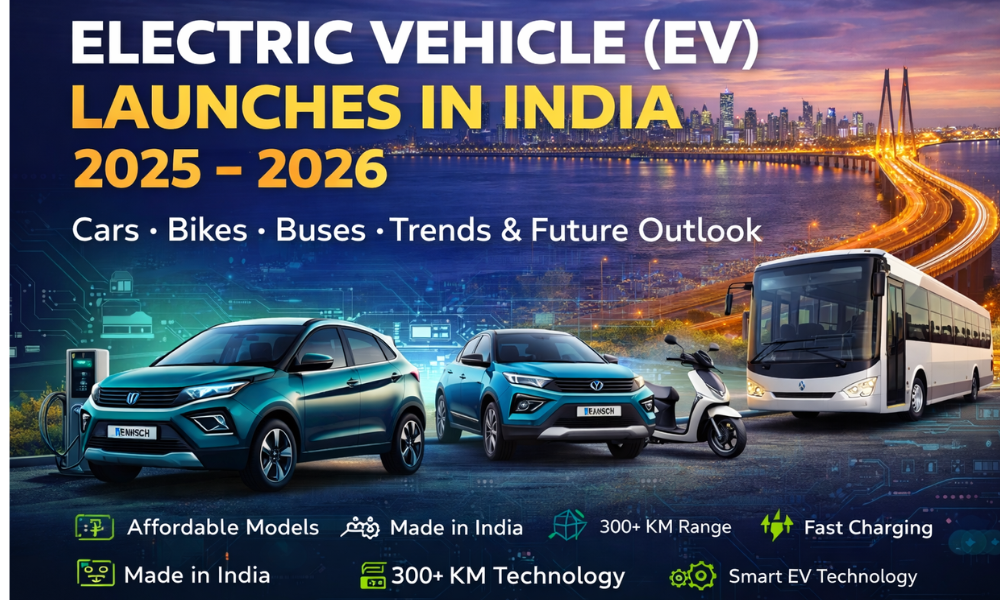
Major automobile manufacturers, startups, and global brands are aggressively launching new EV models tailored for Indian roads, budgets, and usage patterns. This article explores the latest EV launches in India, key trends driving adoption, and what the future holds for the Indian EV market.
Why EV Launches Are Accelerating in India
- Several factors are fueling the rapid rise of EV launches in India:
- Government incentives under FAME-II and state EV policies
- Lower running and maintenance costs compared to petrol and diesel vehicles
- Improved charging infrastructure across metro and Tier-2 cities
- Growing environmental awareness among consumers
- Technological advancements in batteries and range
Together, these factors are encouraging both manufacturers and buyers to embrace electric mobility.
Major Electric Vehicle Launches in India (2025–2026)
Electric Cars
India has witnessed a surge in affordable and premium electric car launches:
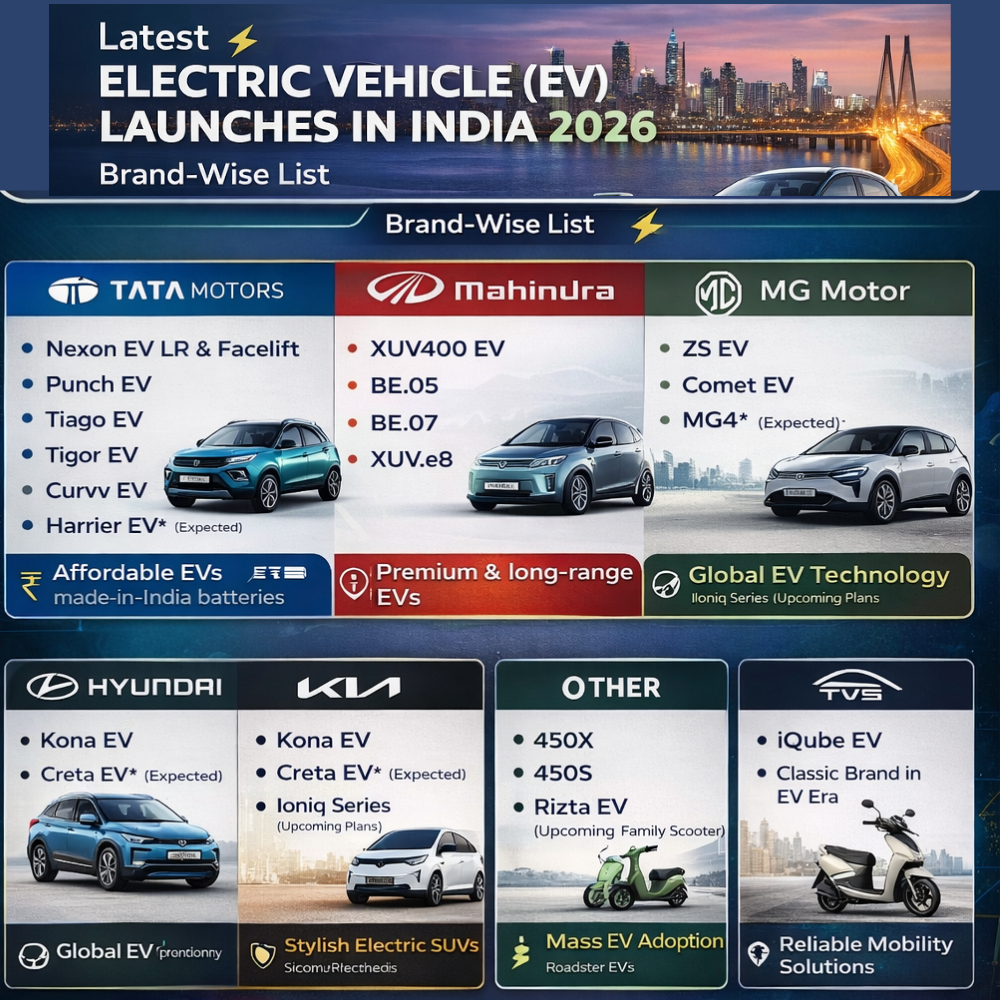
- Tata Motors continues to dominate with models like Nexon EV, Punch EV, and upcoming Curvv EV
- Mahindra Electric has entered the performance EV segment with XUV.e and BE series
- MG Motor offers long-range options with the ZS EV and Comet EV
- Hyundai and Kia are expanding their EV portfolios with localized production plans
- These launches focus on longer range, faster charging, and competitive pricing, making EVs more accessible to Indian buyers.
Electric Two-Wheelers
Electric scooters and bikes are leading EV adoption in India due to affordability and urban suitability.
Popular EV two-wheeler launches include:
- Ola Electric S1 series
- Ather Energy 450 lineup
- TVS iQube
- Bajaj Chetak Electric
- Hero Vida EV
These models offer smart connectivity, fast charging, and real-world range suitable for daily commuting.
- Electric Buses & Commercial EVs
- India is also witnessing strong growth in electric buses and commercial vehicles:
- State transport undertakings adopting electric city buses
- E-rickshaws and electric cargo vehicles transforming last-mile delivery
- Companies like Tata, Ashok Leyland, and Olectra leading the segment
These EV launches play a major role in reducing urban pollution and operating costs for businesses.
Key Trends in EV Launches in India
- Focus on Affordability
Manufacturers are prioritizing budget-friendly EVs priced under ₹15 lakh and affordable two-wheelers under ₹1.5 lakh.
- Localized Manufacturing
To reduce costs and dependency on imports, companies are setting up battery plants and EV manufacturing units in India.
- Improved Driving Range
New EV launches now offer 300–500 km range, addressing range anxiety concerns.
- Fast-Charging Technology
DC fast chargers and home charging solutions are becoming standard features.
- Smart & Connected Features
EVs now include mobile apps, OTA updates, AI-based diagnostics, and smart dashboards.
Government Support Boosting EV Launches
The Indian government plays a critical role in accelerating EV adoption:
FAME-II subsidies for electric vehicles
Reduced GST on EVs (5%)
State-level incentives like road tax exemption and registration benefits
Investment in public charging infrastructure
These initiatives have encouraged manufacturers to announce new EV launches in India every quarter.
- Challenges Facing EV Launches in India
- Despite rapid growth, challenges remain:
- Uneven charging infrastructure in rural areas
- High initial cost of premium EVs
- Battery recycling and disposal concerns
- Dependence on imported lithium
However, continuous innovation and policy support are helping overcome these hurdles.