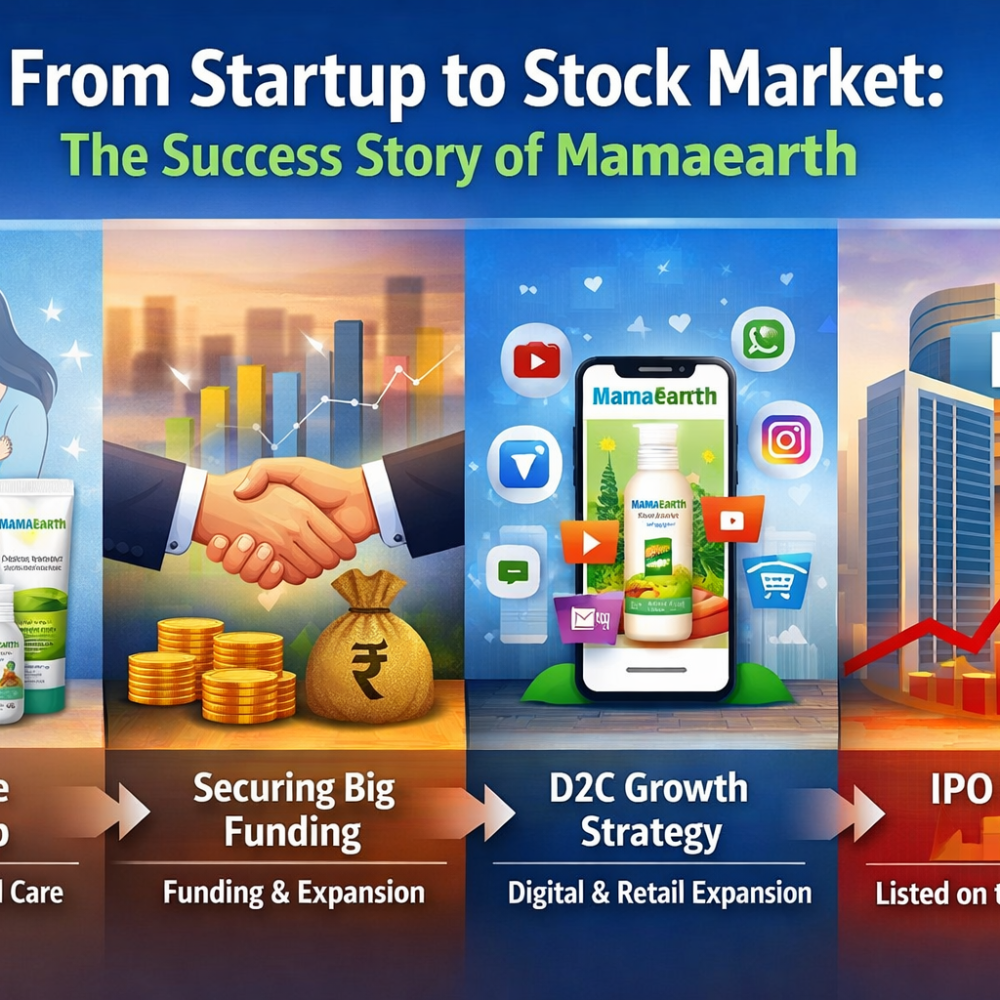
Mamaearth: This is perhaps one of the most successful D2C startup ventures in India, as it has managed to turn an elementary idea into a Listed Company on the stock exchanges. Started with the aim of providing toxin-free personal care products, it gained immense popularity and loyal customers from the Indian Gen Y demographic. With clever online marketing campaigns and strong backing from investors, this startup managed to grow at an incredible rate from being a startup to being part of the stock market scenario.
Mamaearth: Addressing a Gap in the Market
At the time Mamaearth was introduced to the Indian marketplace, the population was becoming increasingly aware of the dangers posed by using chemically-laden products on their bodies. Most of the competition in the personal care industry was producing products for mass consumption without any regard for the safety of the constituents in the product, particularly for babies and new mothers. Mamaearth recognized this opportunity to fill the void left by traditional mass-market brands and to establish itself as a non-toxic, Made Safe-certified personal care brand for urban Indian consumers who are health-conscious. Initially, Mamaearth’s product offering was primarily focused on baby care products. The primary emotional and trust pain point for parents was the safety of their children’s care products. By promoting a message of “no chemicals” and using only natural ingredients, Mamaearth effectively differentiated itself from other companies in the crowded personal care sector. Mamaearth’s early branding focused on safety, honesty, and credible certifications, all of which contributed to building trust with consumers in a short period. This clearly defined and communicated product-positioning enabled Mamaearth to capitalise on the rapidly growing market demand for clean, conscious, safe-to-use products within personal care in India.
The Growth Plan for Mamaearth through Self-Funding and Capital Investment
Mamaearth started as an independently funded company that targeted a very small number of products and expenses in order to evaluate the demand for the products on the market. With positive feedback from initial customers, the founders began to generate interest from investors. Over time, Mamaearth obtained funding from a number of high-profile investors, including Sequoia Capital India and Fireside Ventures, who have played an important role in growing the company. These funds have been utilized by Mamaearth to add to their product categories beyond products for babies to include products for skin, hair and health. In addition, Mamaearth has invested heavily in advertising, supply chain management, and hiring new employees. Instead of focusing solely on becoming profitable as quickly as possible, Mamaearth’s strategy has focused on rapid growth and increasing the visibility of the brand in the market and acquiring customers. This strategy has assisted Mamaearth in transforming from a niche startup into a well-known D2C company nationally in a short period of time.
D2C-Powerhouse Strategy: Digital Marketing and Distribution
Mamaearth’s growth is due in part to its highly developed digital first, D2C (direct to consumer) approach. The company was able to rely on influencer marketing through collaborations with thousands of content creators on platforms like YouTube, Instagram, and parenting blogs. This type of marketing provided significant authenticity and created the ability to generate word-of-mouth reviews for Mamaearth products at an impressive scale. In addition, Mamaearth was able to leverage digital performance marketing through paid social media advertising and search engines to create repeat, loyal customers. Additionally, Mamaearth used data-driven insights to expand its product range at an increasing rate in response to consumer demand. Initially an online-only D2C player through their website and other marketplaces, Mamaearth transitioned to an offline presence through grocery and drug store channels as well as exclusive franchise locations throughout India, creating both online and offline access to its products. Additionally, the omnichannel implementation allowed Mamaearth to capture both highly sophisticated e-based shoppers and more traditional retail purchasers, thereby enhancing the company’s market presence and revenues.
IPO Journey: From Startup Brand to Listed Company
Mamaearth’s parent company, Honasa Consumer Ltd., attained an important milestone by entering the stock market, which signifies that India’s direct-to-consumer market has matured at this point in time. Before entering the stock market through an IPO, Mamaearth performed well on various parameters like revenue growth, product diversification, and creation of multiple brands of its own. The IPO saw interest from not only the general public but from institutional investors as well, which estimated the company at multi-billion rupees. With this IPO, not only did Mamaearth create history by becoming one of India’s earliest direct-to-consumer brands that turned into a publicly-held company, it set an example in front of Indian startups that newly-born brands on social media platforms are capable of competing effectively against other FMCG majors in the stock market as well.
Conclusion
This is especially evident in the case of Mamaearth, which has grown from being a small startup to being a listed company, and it proves that proper market analysis and the execution of the correct strategy with the proper use of capital can lead to the development of successful FMCG brands in the Indian market. The brand was successful in creating its identity in the market by being toxin-free, and through proper digital marketing, it was successful in capitalizing the entire market and becoming one of the leading brands in the FMCG sector in the Indian market. This is not only the success story of the brand but also the success of the entire India’s Direct-to-Consumer market. Brands like Mamaearth have proved that it is possible for Indian startups to become large brands and compete with existing brands in the market with the power of innovation and data.