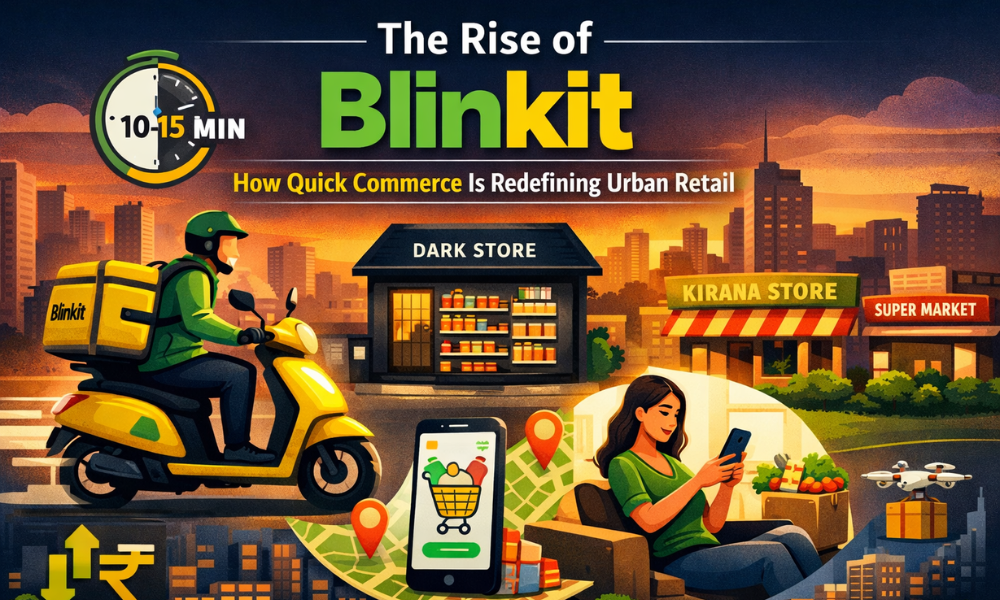
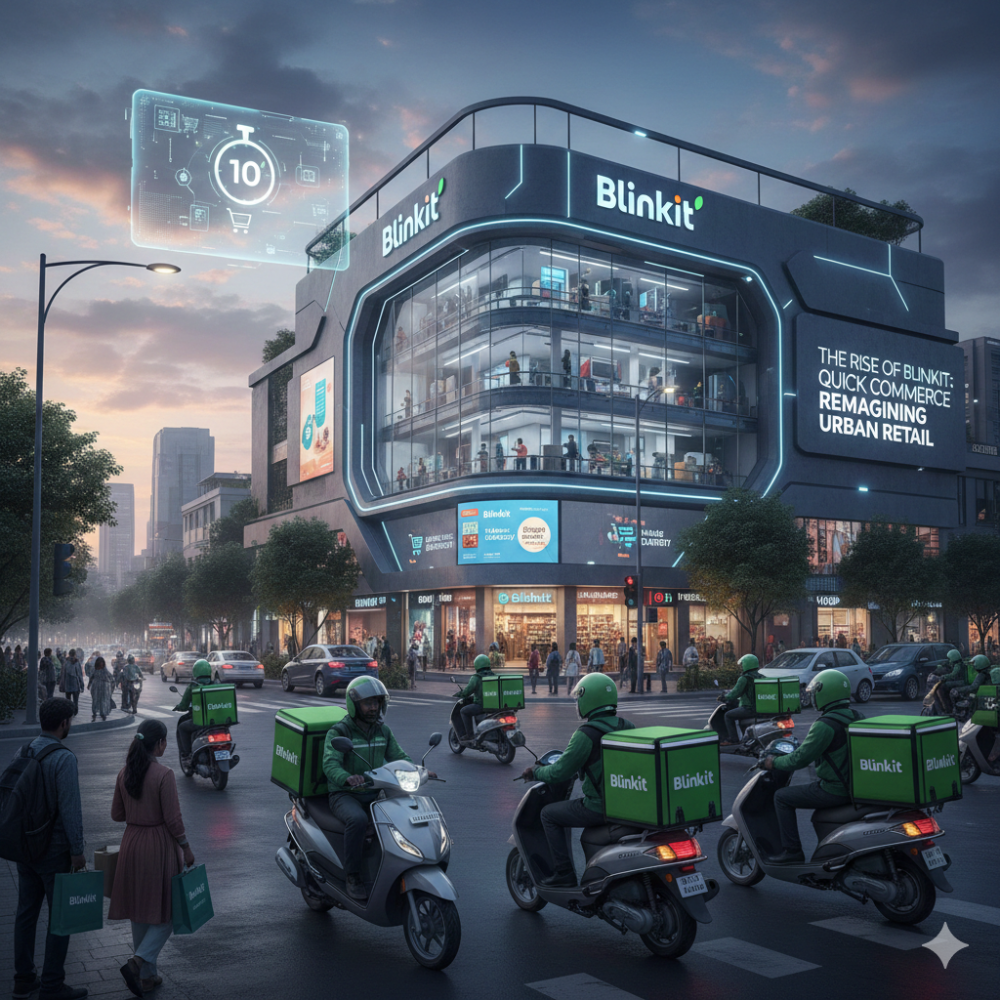
The Indian retail industry in urban India is undergoing a paradigm shift due to the increasing need for quick access to daily essentials. The quick commerce revolution has been led in India by the likes of Blinkit, which has also been known as Gofers. The current “Buy Now, Get Now” approach has been leading this revolution in quick commerce in India. This revolution is changing the trends of shopping along with changing the supply chain management approach. The meaning of convenience shopping has also been altered due to this revolution in quick commerce.
The Evolution of Blinkit: From Grofers to Quick Commerce Leader
Founded in 2013 as an online grocery delivery platform that offered limited availability and time structure of deliveries, Grofers identified an opportunity to rise up and become a leader in this quick commerce market. As urban lifestyles continued to evolve and consumer’s expectations were changing to an instant delivery format, Grofers decided to change the model it utilized going forward. To that end, in 2021, Grofers announced its rebranding to Blinkit and has committed to offering a delivery time frame of 10-15 minutes.
Blinkit started the rebranding and re-positioning phase of the business in earnest; this involved a total operation, logistics, and technology re-tooling.
In 2022 Blinkit received a further boost when the company was acquired by Zomato as through this acquisition, Blinkit was granted access to both funds (capital) and delivery infrastructure, plus access to a tremendous urban market. Blinkit has been aggressively expanding and focusing heavily on the speed of delivery and has effectively replaced itself as the dominant player within the Quick Commerce sector in India.
Dark Stores & Hyperlocal Logistics: The Backbone of Blinkit’s Speed
The foundation of Blinkit’s guarantee for rapid delivery is the company’s dark store model, which consists of a network of dark stores. These dark stores are essentially several small warehouses that are strategically placed within a metropolitan area and are designed specifically to supply products to consumers making purchases through eCommerce channels. In contrast to conventional retail stores, dark stores lack customer-facing environments and are instead designed with the goal of maximising operational efficiency in order to fulfil customer demands as quickly as possible.
Furthermore, as a result of the placement of both types of fulfilment centres (the retail store and dark store), Blinkit has reduced the time from when a customer places an order to when they receive it to only 2 to 3km away from their location. Thus, the company’s delivery times from warehouse to door are markedly faster than traditional retail models.
In addition to its dark store model, Blinkit employs a robust and rapidly changing inventory management system and a fleet of hyper-local couriers who have the ability to swiftly respond to an order during peak hours. When used in conjunction with Blinkit’s dark store model, the company’s hyperlocal delivery network ultimately provides an extremely efficient logistics operation, thereby enabling its rapid delivery service to grow in volume and scale.

Changing Urban Consumer Behaviour: Convenience Over Cost
Urban consumers’ view of grocery and essential shopping has changed dramatically through the development of quick commerce platforms like Blinkit. Clients desire the ability to shop for groceries and essentials when they want, without needing to wait until their next planned grocery trip. The majority of products purchased by customers through Blinkit are ordered multiple times a week (instead of being ordered once a week as in the past) for quick, spontaneous purchases such as snacks and drinks.
The trend towards convenience has been accelerated by app notifications and promotion offers sent to users. Quick Commerce provides late night delivery capabilities, impulse buying behaviour, and easy access to these offers. Quick Commerce has changed how users shop for groceries and essentials through defining what they need at that moment; which has changed how urban India views its expectations of shopping.
Impact on Urban Retail & the Future of Quick Commerce in India
The increase of Blinkit has had a huge effect on the traditional shops found in urban areas. Traditional urban retail shops include both small grocery shops (also known as kirana stores) and supermarket. While many small retailers are facing competition from Blinkit and other new companies, some small retailers have adapted to this new competition by teaming up with companies like Blinkit and using technology to sell their goods online. This market has become very competitive with other companies like Zepto, Swiggy Instamart, and Big Basket Now also trying to gain market share.
The future of the quick commerce sector faces a number of challenges, including high operating costs and low profit margins. However, advancements in technology, improving demand forecasting, and greater scale efficiencies may ultimately help to make quick commerce a successful business model over time. As more and more people live in urban areas and become accustomed to using digital services, Blinkit is well positioned to establish itself as a key player in the future of retailing in India.
Blinkit’s rise epitomizes a larger shift in retail within urban ecosystems, driven by speed, convenience, and hyperlocal fulfillment. Quick commerce, facilitated through the use of dark stores, data-driven logistics, and changing consumer behavior, has moved from a niche concept to a mainstream need in Indian cities. Though challenges persist over profitability and sustainability, Blinkit has already rewritten the rules on how urban consumers access everyday necessities. And as technology continues to evolve, so does the demand for instant delivery, making sure quick commerce becomes a permanent pillar in India’s evolving retail ecosystem.