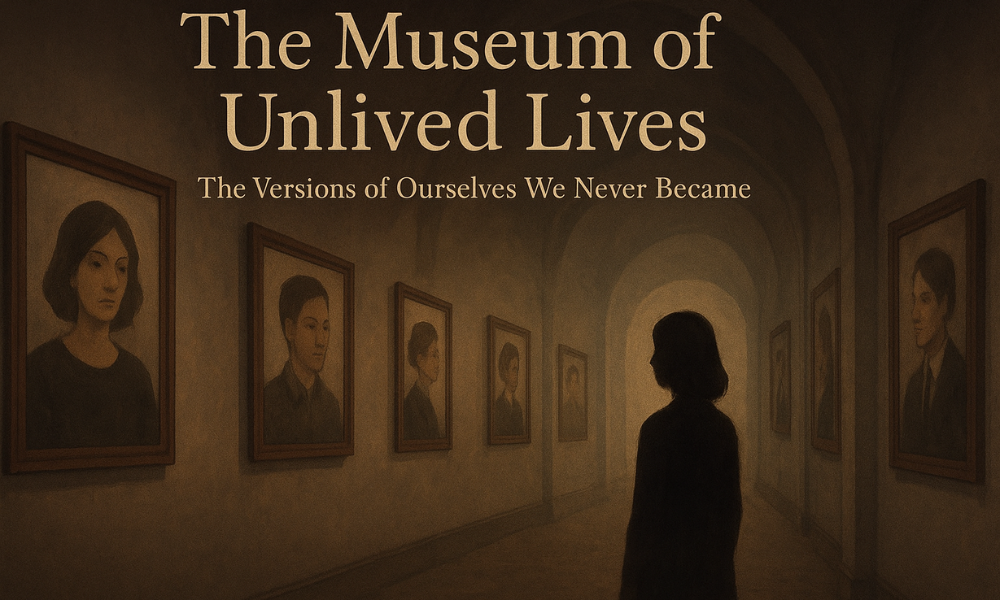
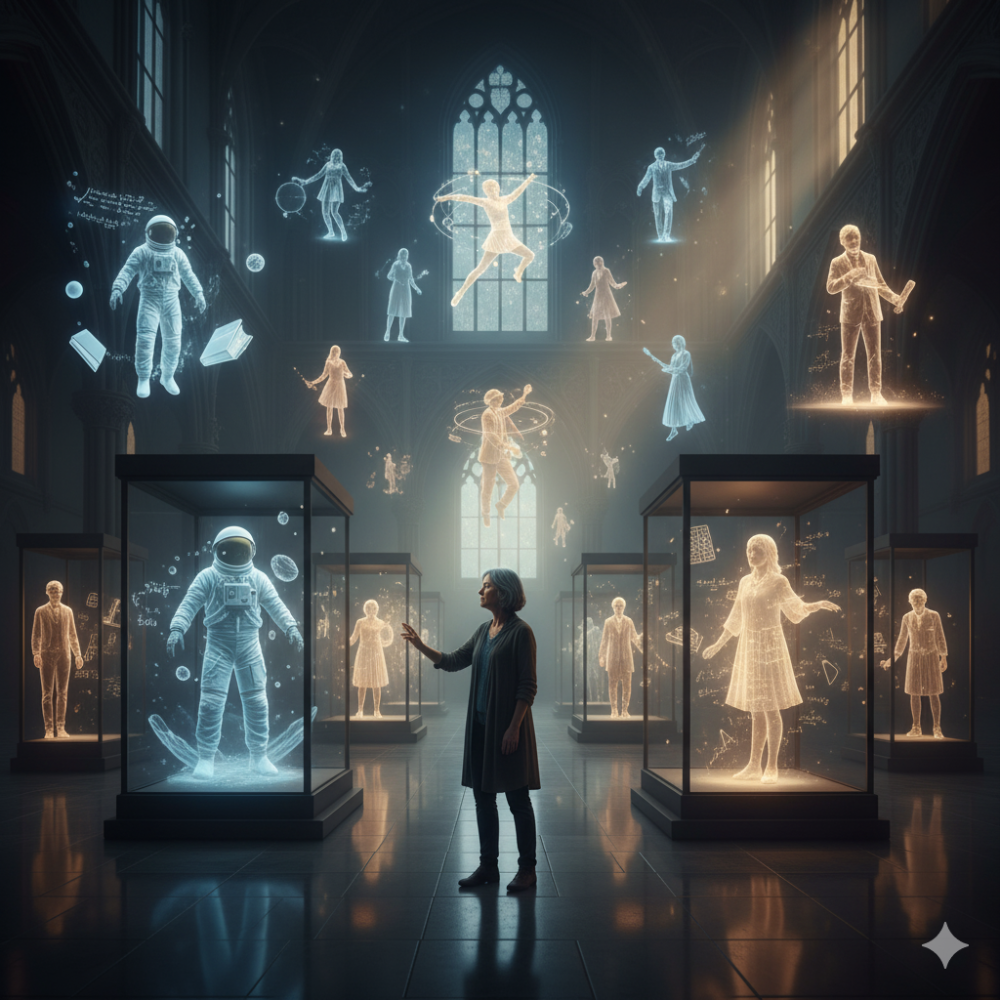
Imagine a museum unlike any other. There are no glass cases, no ancient artifacts, no guided tours. Instead, its halls are filled with quiet moments, invisible turning points, and choices that were never made. This is the Museum of Unlived Lives—a place that exists only in memory and imagination, yet is visited by almost everyone at some point in life. It is the space where we store the lives we could have lived, the paths we didn’t take, and the people we never became.
Every person carries an inner archive of “what ifs.” What if we had said yes instead of no? What if we had stayed instead of leaving? What if we had chosen courage over comfort? These questions don’t disappear with time; they settle quietly in the background of our minds.
The Museum of Unlived Lives is built from these moments. Each room represents a version of ourselves shaped by a different decision. A career pursued and abandoned. A love that almost happened. A city we dreamed of living in but never moved to. These unlived lives are not failures—they are evidence of possibility.
Life often feels like a straight line when we’re living it, but in retrospect, it looks more like a web of branching paths. At every major crossroads, countless alternatives appear. We choose one, and the rest fade into shadow.
The paths we didn’t take still hold emotional weight. Sometimes they represent freedom, sometimes loss. We imagine who we might have been if we had walked them—stronger, happier, braver, or perhaps lonelier. These imagined outcomes are rarely realistic, but they are deeply human. They allow us to explore our values, our regrets, and our unmet desires.
Perhaps the most haunting exhibits in the museum are the versions of ourselves we never became. The artist who stopped creating. The traveler who chose stability. The risk-taker who decided to play it safe.
These unlived selves are shaped by fear, responsibility, circumstance, and timing. Often, we judge them harshly, believing we “failed” them somehow. But becoming one version of ourselves means letting go of many others. Growth is an act of selection, not accumulation. We cannot be everything, no matter how much we wish otherwise.
The museum also holds the people who almost mattered—the friendships that faded before deepening, the love stories that never fully began, the conversations that stayed unspoken. These relationships exist in a space of possibility rather than reality, which often makes them feel more perfect than the ones we actually lived.
We tend to romanticize what never happened because it was never tested by time, conflict, or reality. Yet these connections still shape us. They teach us about longing, timing, and the delicate balance between desire and action.

We don’t visit the Museum of Unlived Lives out of weakness. We go there to make sense of who we are. Looking back allows us to measure how far we’ve come, what we’ve sacrificed, and what still matters to us.
Sometimes, revisiting these unlived lives brings regret. Other times, it brings relief. We realize that the life we imagined may not have suited us after all. Or we understand that the choices we made, even when painful, were necessary for our survival or growth.
While reflection can be healthy, living permanently in the museum can trap us. Constantly replaying alternate versions of our lives can lead to dissatisfaction with the present. We may compare our real life to an idealized fantasy and find it lacking.
The unlived lives in the museum are incomplete by nature. They exist without struggle, boredom, or consequence. Real life, in contrast, is messy and imperfect—but it is also alive. When we spend too much time mourning what never was, we risk missing what still can be.
Making peace with the Museum of Unlived Lives doesn’t mean closing its doors forever. It means learning how to visit without getting lost. We can acknowledge our regrets without letting them define us. We can honor our past choices while allowing ourselves to evolve.
Some unlived lives are not gone forever—they are simply postponed. Dreams can be revisited, passions rekindled, and paths reimagined in new ways. Life rarely offers the exact version we once imagined, but it often offers something equally meaningful.
Ultimately, the purpose of the museum is not to remind us of what we lost, but to clarify what we value. Each unlived life highlights a desire, a fear, or a truth about ourselves. By understanding them, we become better equipped to make conscious choices moving forward.
The life we are living now is also becoming an exhibit in someone else’s museum—our future self’s. The choices we make today will determine which paths remain open and which become stories of “almost.”
The Museum of Unlived Lives is not a place of sadness, but of understanding. It holds the echoes of who we might have been, not to haunt us, but to remind us that life is shaped by choice. We are not defined by the lives we didn’t live, but by the courage it takes to live the one we have.
By honoring our unlived lives without clinging to them, we learn to move forward with compassion—for ourselves and for the many versions of us that quietly made way for the person we are today.
Hemangi writes content that educates, informs, and inspires a wide audience.