Temples and Sacred Spaces
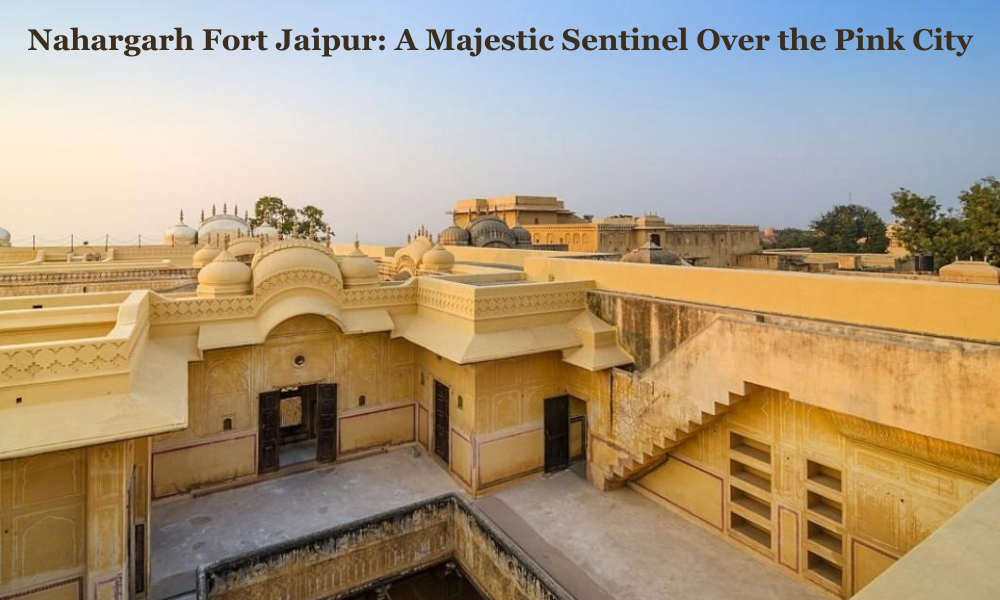
Within the fort complex lies the Nahargarh Temple, dedicated to Nahar Singh Bhomia. Locals and visitors alike believe that the temple protects the fort and the city of Jaipur. Another small temple dedicated to Prince Madhav Singh is also located inside the fort, adding to its spiritual significance.
Breath-taking Views of Jaipur
One of the biggest attractions of Nahargarh Fort is the spectacular view it offers of Jaipur city. From the fort’s ramparts, visitors can enjoy a sweeping panorama of the Pink City, especially mesmerizing during sunrise and sunset. As evening falls, Jaipur lights up below, creating a magical sight that attracts photographers, couples, and travelers from around the world.
The fort is also a popular spot for night tourism, as the city’s illuminated skyline creates a serene and romantic atmosphere that is hard to forget.
Nahargarh Fort Today
In modern times, Nahargarh Fort has been transformed into a cultural and tourism hub. The Nahargarh Fort Wax Museum, located nearby, features lifelike wax statues of historical figures, Bollywood celebrities, and global icons, making it a fun attraction for families and young visitors.
The fort also houses an open-air restaurant and café, allowing visitors to enjoy traditional Rajasthani food and refreshments while soaking in stunning views of Jaipur. Cultural events, photography sessions, and heritage walks are often organized here, making the fort a lively destination beyond its historical appeal.
Best Time to Visit Nahargarh Fort
The best time to visit Nahargarh Fort is between October and March, when Jaipur experiences pleasant winter weather. Summers can be extremely hot, especially during daytime visits, so early morning or evening trips are recommended.
Sunset is considered the most popular time to visit, as the golden hues of the setting sun paint the city below in breathtaking colors.
How to Reach Nahargarh Fort
Nahargarh Fort is located about 6 kilometers from Jaipur city center. Visitors can reach the fort by taxi, auto-rickshaw, or private vehicle. The road leading up to the fort is scenic but winding, offering glimpses of Jaipur as you ascend the hills. For adventure enthusiasts, trekking routes to the fort are also available.
Cultural and Tourism Significance
Nahargarh Fort is more than just a historical monument—it is a living testament to Jaipur’s royal legacy and cultural richness. It represents the foresight of Rajput rulers, their architectural mastery, and their deep connection with the land they governed.
Today, the fort attracts thousands of tourists every year, serving as a bridge between Jaipur’s glorious past and its vibrant present. Whether you are a history enthusiast, a photography lover, or a traveler seeking scenic beauty, Nahargarh Fort offers something for everyone.