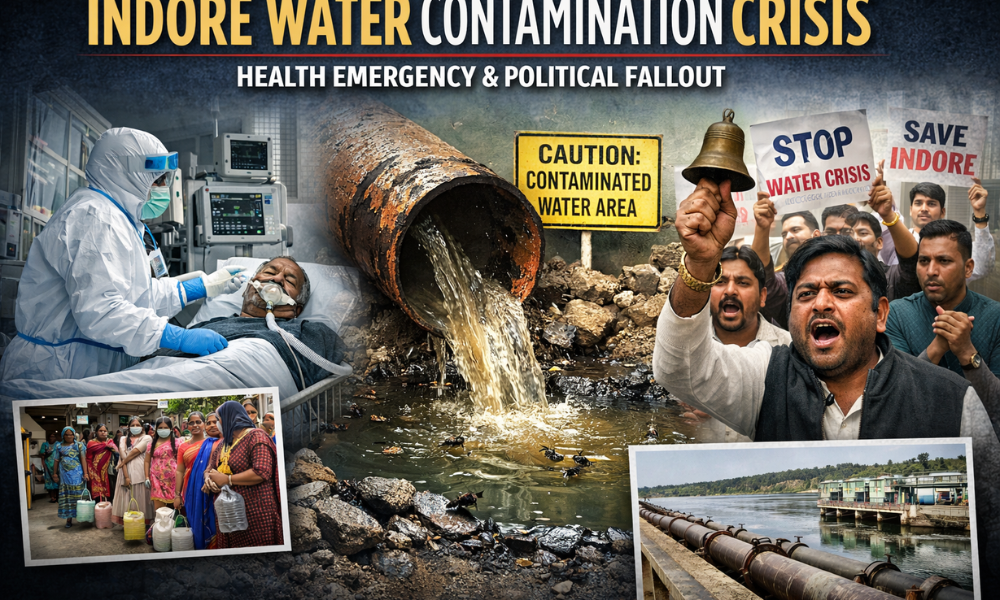
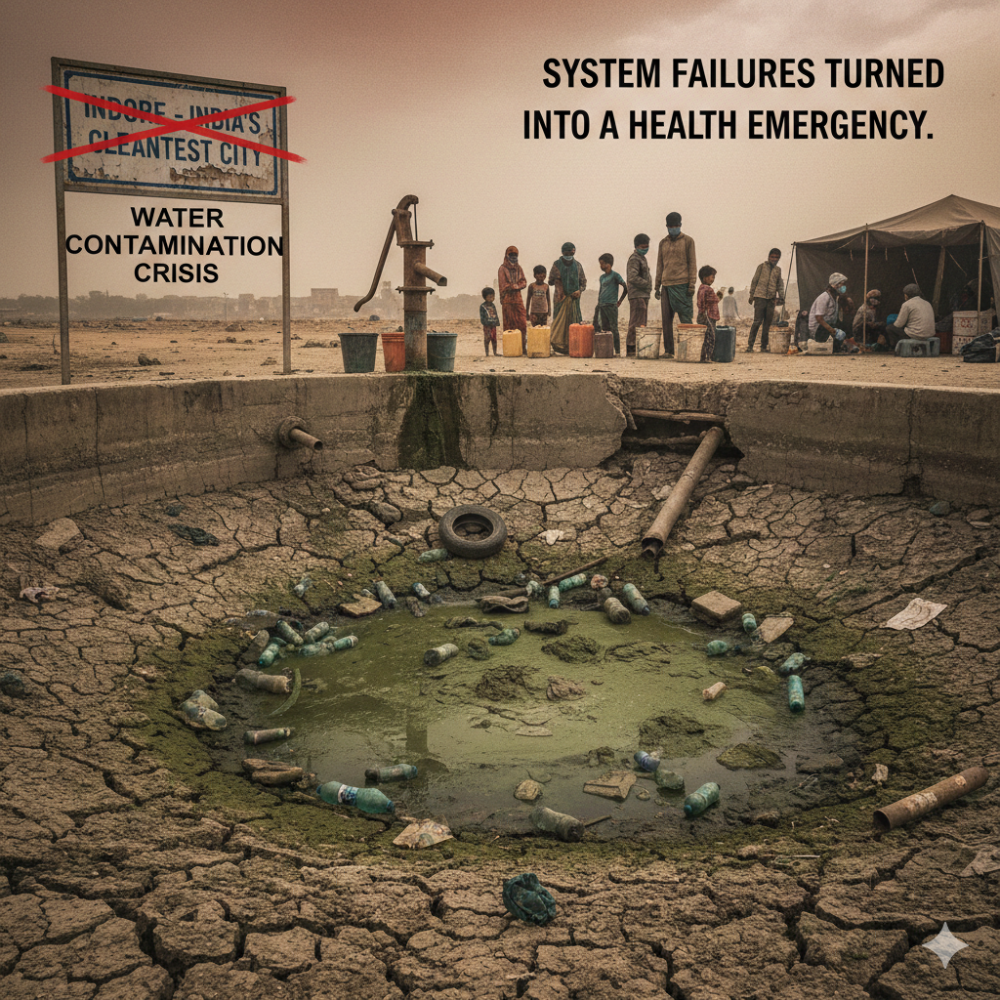
Indore, known as the cleanest city in India, saw a very serious health crisis emerge in the Bhagirathpura area of the city as the contaminated water supply led to a case of diarrhea in the area. Scores of residents have been reported to have fallen ill, and lives have even been lost. The concern, which started off as a local problem in the city of Indore, eventually brought to the fore the inadequacies in the management of water in Indian cities.
Health Emergency in Bhagirathpura, Indore – The Scale of Outbreak is Beyond Our Imagination.
After a large number of screenings by health officials at homes in the Bhagirathpura area of Indore due to an outbreak of diarrhoea, we only became aware of the true scale of the health emergency after health workers visited houses door-to-door. The number of people screened was large, with an estimated 9,400 individuals across 2,300 homes screened. Out of these 9,400 individuals, 20 new cases were reported, all after the public health authorities declared the outbreak to be over. Hospitalisation was required for nearly 400 individuals, emphasising the very rapid spread of disease through drinking water that had been contaminated. Currently, 256 individuals have been discharged from hospital following treatment, while 142 patients still remain in hospital, with 11 of those individuals being treated in an intensive care unit. Politicians and residents believe the official death toll of six individuals to be underestimated; they feel it is likely much higher based on their discussions with local medical personnel, health officials, etc. The outbreak also placed a significant strain on government-run hospitals and highlighted deficiencies in the ability of health officials to adequately detect and precisely respond to the rapid spread of this outbreak to local residents. As a result, for many residents, it has created a lack of trust in using municipal tap water for their drinking and cooking needs, requiring them to rely on private systems and/or tankers to supply them with water for their daily needs.
What Went Wrong: Sewage Overflow, Pipeline Construction Problems, and Institutional Failures
Authorities have admitted the sewage spillage has resulted in the entry of sewage into the drinking water lines, which directly led to the outbreak. The technical team from the National Institute for Research in Bacterial Infections (NIRBI) to address this issue indicates the severity of this incident. It appears this issue would have been prevented and was an incident caused by negligence rather than an accident. The probable negligence would have been on the part of the authorities and the contractors involved in the water supplying mechanism. Thefact the technical team had to arrive to address the issue indicates the severity of the issue. The possible causes for this incident could be the water supply lines are laid close to the sewage systems. The water leakages and the pressure differences allow the sewage to mix with the drinking water lines. Normally, this should have been a concern for the authorities, and measures should have been taken to address this issue. But this appears to have been neglected, and the issue has culminated into a disaster.
Political Consequences and Public Indignation: Protests, Suspensions, and Calls to Account
The health crisis has soon snowballed into a political hot spot in the state of Madhya Pradesh. The leaders of the Opposition have accused the state government and the civic bodies of not heeding to the warning signals sent by the residents. The issue further snowballed with a controversial statement by a senior minister in the government. The Congress has organized protests in the state, demanding a judicial probe and criminal complaints against the mayor and the civic administrators. The issue has further been fueled by the suspension of a sub-divisional magistrate in an adjoining district, sparking worries about the lack of discipline in the administration and the politicization of the administrative directives. The issue has not only underscored the partisan battles in Indian democracy, where the Opposition is squarely attacking the ruling government. Rather, the issue has sensibly reminded the citizenry and the government machinery of the lack of confidence between the citizenry and the urban governance structures in India.
A System-Created Disaster: Costly Water Supply Model and Long-Term Impacts for Indore
The Indore outbreak has been termed a “system-created disaster” by water conservation specialists. The main reason for the situation in the Indore water supply system is the dependence on the Narmada river for water, which comes from a distance of around 80 km away. The civic body has reportedly been paying a bill of around ₹25 crore a month for the use of electricity in the water supply system alone. Paradoxically, the groundwater level in the area is still falling. Experts feel that the situation has arisen because of the low level of transparency in the use of funds for water conservation in the country. A paradox arises when one compares the cleanliness of the city with the situation arising in the wake of the lack of safe drinking water in the same Indore.
Conclusion
This situation highlights the dangers of not properly managing our urban infrastructure systems. The infrastructure and governance failures have directly contributed to a large-scale public health issue. However, in addition to creating a direct public health threat to the citizens of Indore, this crisis has created many more issues; for example, it shows how poor oversight and management can result in ineffective urban water management. All cities must be aware of these issues so that they are prepared for growth in order to provide safe, sustainable drinking water for all citizens through improved planning, monitoring, and regulated discharge of treated wastewater.