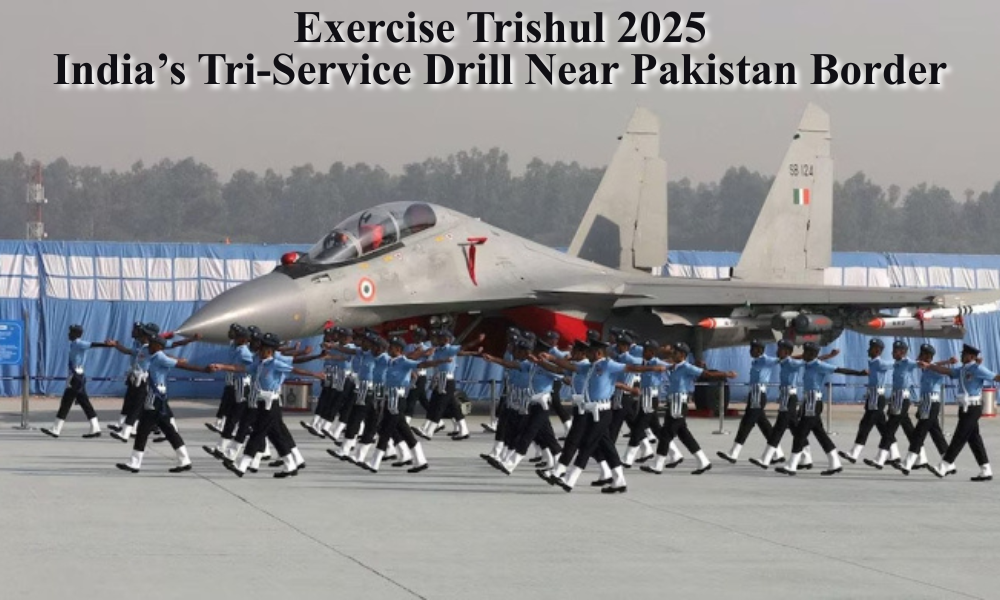
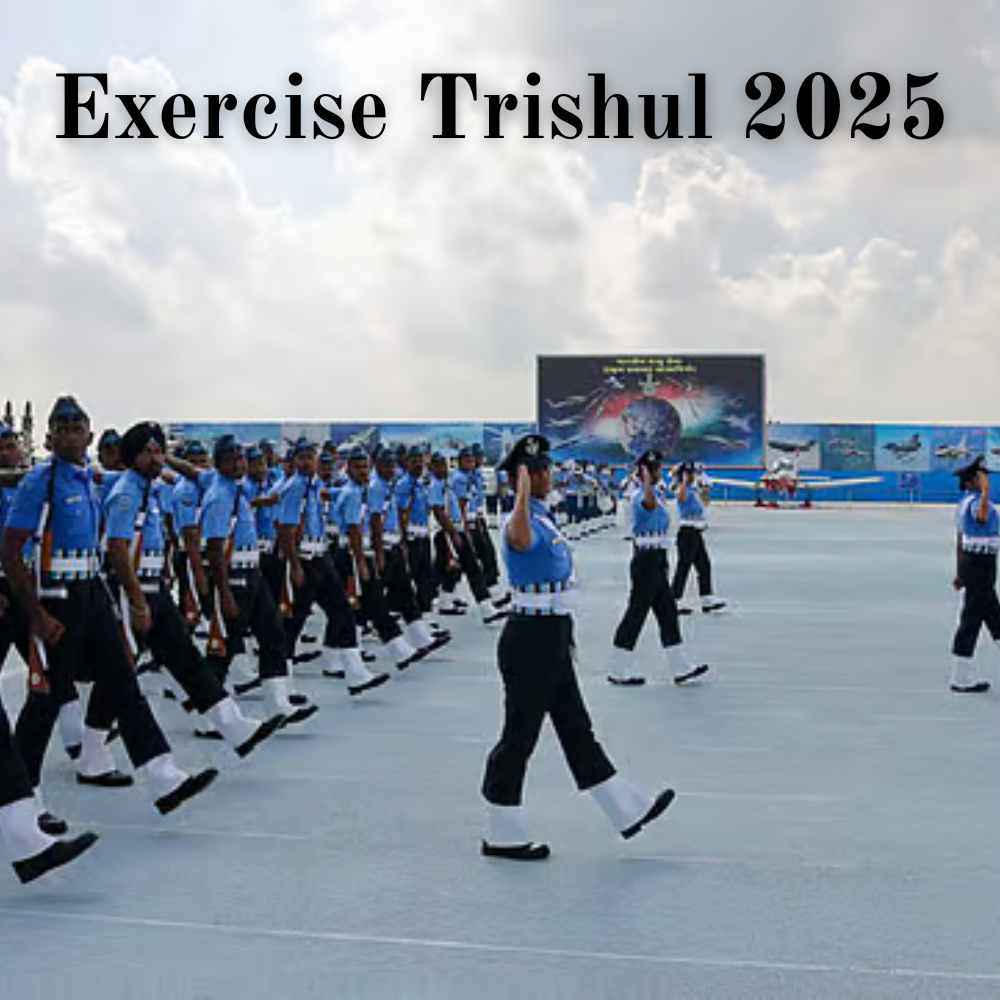
India’s defence preparedness received a major boost with Exercise Trishul 2025, a large-scale tri-service military drill involving the Indian Army, Indian Navy, and Indian Air Force. Conducted near the Pakistan border, the exercise showcased India’s growing emphasis on joint operations, integrated command structures, and rapid response capabilities in sensitive border regions. The drill highlighted the country’s commitment to maintaining high operational readiness amid evolving regional security challenges.
Exercise Trishul 2025 was designed to test coordination among the three armed forces in a realistic combat environment, simulating modern warfare scenarios that demand speed, precision, and seamless inter-service cooperation.
In recent years, India has increasingly focused on jointness among the armed forces. Modern conflicts are no longer fought by a single service operating independently. Instead, success depends on the ability of land, air, and naval forces to work together under a unified strategy.
Exercise Trishul 2025 reflects this strategic shift. Conducted close to the western frontier, the drill sent a strong message about India’s preparedness to safeguard its borders while enhancing deterrence capabilities. The location of the exercise underlined the importance of maintaining vigilance along sensitive zones and responding swiftly to any emerging threats.
The primary objective of Exercise Trishul 2025 was to strengthen coordination and interoperability among the three services. Key goals included:
The exercise aimed to ensure that all three services can operate as a single, cohesive force during both conventional and hybrid warfare situations.
The Indian Army played a central role in Exercise Trishul 2025, focusing on ground-based operations, defensive maneuvers, and counter-offensive strategies. Army units practiced troop mobilization, armored movements, artillery coordination, and logistics support under simulated combat conditions.
Special emphasis was placed on border-area operations, including surveillance, rapid reinforcement, and coordination with air support. The exercise tested the Army’s ability to hold ground, conduct swift counter-actions, and integrate seamlessly with air and naval assets.
The Indian Air Force (IAF) demonstrated its critical role in modern warfare during Exercise Trishul 2025. Fighter aircraft, transport planes, and helicopters participated in simulated air combat, reconnaissance, and close air support missions.
The IAF practiced:
Close coordination between air and ground forces ensured accurate targeting and minimized response time, highlighting the importance of air power in supporting land operations near border regions.
Although primarily a land-based exercise, the Indian Navy played an important strategic role in Exercise Trishul 2025. Naval units contributed through maritime surveillance, intelligence sharing, and simulated coastal defence operations.
The Navy’s participation emphasized India’s ability to extend operational reach beyond land borders and secure strategic interests across multiple domains. Integration between naval command systems and land-based forces ensured a comprehensive approach to national security.
A major highlight of Exercise Trishul 2025 was the focus on integrated warfare, where operations across land, air, and sea are planned and executed simultaneously. The exercise tested joint planning cells, real-time communication networks, and unified decision-making structures.
This approach aligns with India’s long-term defence reforms, including the push for theatre commands, which aim to bring all services under a single operational command for specific regions.
Exercise Trishul 2025 also showcased the use of modern defence technologies. Advanced communication systems, surveillance tools, drones, and electronic warfare capabilities were integrated into the drill.
The use of indigenous defence equipment reflected India’s push toward self-reliance in defence manufacturing. Real-time data sharing and network-centric warfare capabilities played a crucial role in enhancing situational awareness and operational efficiency.
Conducting a large-scale tri-service exercise near the Pakistan border carries significant strategic importance. While India maintains a policy of restraint, such exercises demonstrate readiness and capability without escalating tensions.
Exercise Trishul 2025 served as a reminder that India remains vigilant and prepared to defend its sovereignty. It also reinforced the country’s ability to respond effectively to both conventional threats and asymmetric challenges.
Beyond showcasing strength, Exercise Trishul 2025 was fundamentally a training and learning platform. Joint drills allow the armed forces to identify gaps, improve coordination, and refine standard operating procedures.
Senior military commanders closely monitored the exercise, assessing performance and gathering insights to enhance future operations. Such drills help build trust among the services and ensure smoother coordination during real-world contingencies.
Exercise Trishul 2025 fits into India’s broader strategy of strengthening national defence preparedness. Regular joint exercises improve operational synergy, boost morale, and ensure that forces remain combat-ready at all times.
As security challenges become more complex, the ability to operate jointly across domains becomes essential. Tri-service exercises like Trishul play a vital role in preparing India’s armed forces for future conflicts.

Exercise Trishul 2025 marked a significant step in strengthening India’s tri-service coordination and operational readiness. With active participation from the Indian Army, Navy, and Air Force, the joint drill demonstrated India’s commitment to integrated defence operations and robust border security.
By focusing on interoperability, modern warfare techniques, and real-time coordination, Exercise Trishul 2025 reinforced India’s position as a capable and prepared defence force. As the country continues to modernize its military and enhance jointness, such exercises will remain crucial in safeguarding national security and maintaining regional stability.
Hemangi writes well-structured articles that help readers learn and understand quickly.