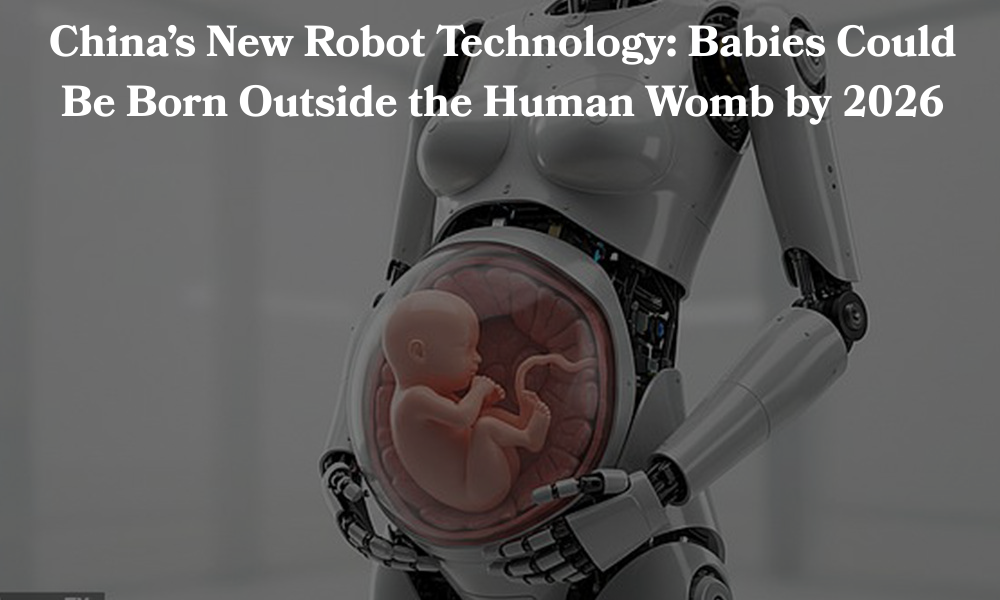
The way we consider having children is changing quickly. Scientists now are doing research with a technology where living robots and machines can help actually grow a baby outside of the human body. This may sound like something from science fiction, but it is slowly becoming reality. For couples who have a difficult time having kids or women who cannot carry a baby, this increases the chances of being able to have kids.
Artificial womb technology is a medical system in which a baby doesn’t develop in the mother’s womb, but inside of a machine that artificially replicates the surroundings of a womb. The scientists and
designers have worked it out in such a way that it feels as though the environment of the artificial womb has conditions that are supportive to the embryo like they would be in the uterus of a mother.
Robots that attend to all stages of development and monitoring systems oversee everything — from making sure the right nutrition and metabolic components are provided via tubes to maintaining
temperature and oxygen level — within the controlled artificial womb. The ultimate goal is to allow the embryo to develop fully outside the human body while providing all of the protection and care that nature ultimately intended.
In China, scientists are developing new technology with robots that could help to have babies. China is in the process of developing a “gestation robot” that would facilitate the growth of embryos in artificial wombs and it is being developed by a company called Sujiu Technology, led by Dr. Gong Jing from the Beijing Institute of Technology. The concept is extremely simple, instead of a baby developing inside the womb of a mother, it will be developed in an external womb that is fully monitored and supported by robots.
The robots will make sure that the embryo receives nutrition and oxygen via feeding tubes and keeping the environment inside the womb protected. The idea is that “the artificial Womb mimic a full-term gestation process outside of the human body. Experts hope that this might change the future for many couples who are unable to have natural children. This may also benefit any women who do not want to risk the health issues and pain that accompanies pregnancy.
The first model of this machine is expected in 2026, and the price is likely to be 11.5 lakh rupees. Many see this invention as a godsend — an opportunity to become parents in a completely different manner.
The primary objective for this kind of technology is to provide hope for individuals who are unable to have children naturally. Every year countless couples face infertility and they would likely welcome this option as a chance of having a child. Scientists also see it as an opportunity to mitigate the risks associated with being pregnant as a woman.
In some cases, a woman being pregnant is a threat to the health of the woman, and in this context, this may provide a safer pathway. A second reason is choice. Not all women will want to endure the physical changes, pain or complications that accompany pregnancy. An artificial womb or uterus may provide
them this option without taking away their potential of having their own biological child. Chinese researchers believe this invention will act as nature’s support system with the help of advanced
machines. At the heart of the concept is simple: allowing more people the opportunity of becoming parents and minimizing some of the difficulties of traditional pregnancy.
This technology could be a boon for couples who cannot have biologically-based children. It may assist women with health concerns surrounding pregnancy or simply preferred to avoid the distress and complexities of carrying a baby. In sum, it provides a new way to parenthood for those individuals who may not have been able to.
Artificial wombs may change our perception of pregnancy altogether. They could potentially offer more options for families, as well as relieve the burden of women with difficult or unsafe pregnancies, and we should consider them being put to use for more support of premature births in hospitals – giving babies extra time and support outside the mother’s body.
However, there are still major concerns. We don’t know enough about long-term growth safety for the
child, and the costs are very high, keeping this technology primarily for affluent families. Additionally, the continued ethical questions around replacing natural pregnancy are going to continue to be argued.

Artificial womb technology is still new, but it is opening avenues that we never knew existed. For some individuals, it could create an easier and safer alternative for forming a family beyond childbirth, while for other individuals, ethical dilemmas may be raised as it pertains to their practices. The true impact will become evident once the technology is implemented and accepted by society in the coming years.
Vivo T4 Pro 5G India Launch 2025: Price, Specs & Features Revealed
Helping businesses grow through content — that’s what Nikita does best.