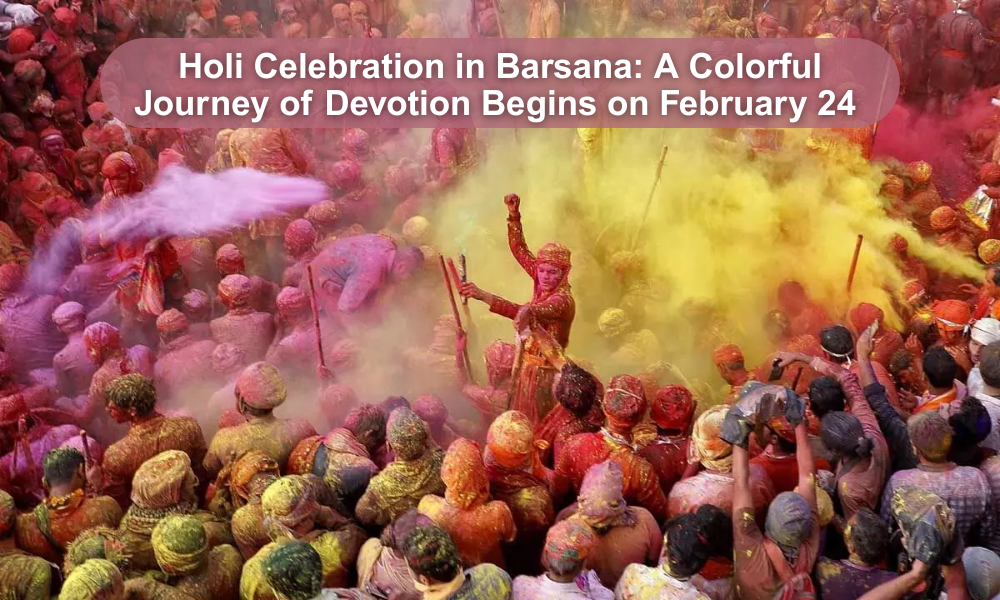
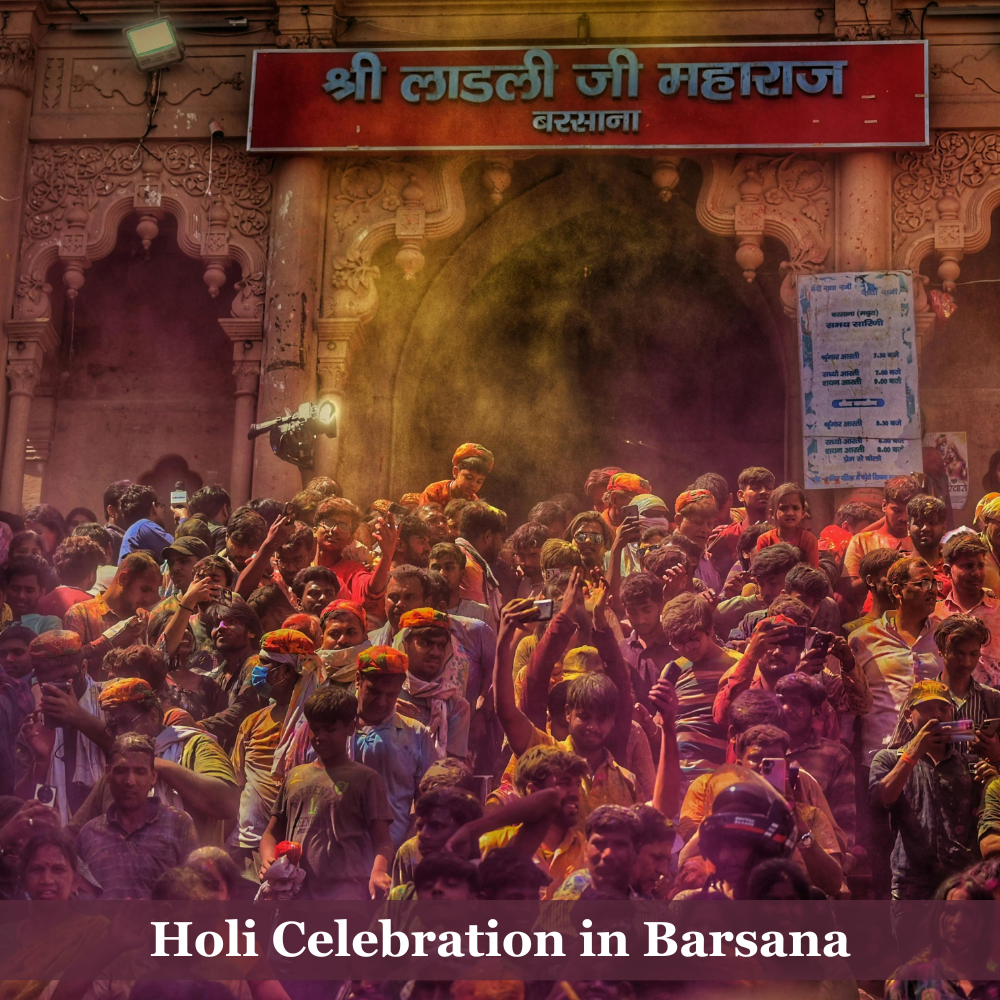
The small town of Barsana, nestled in the heart of the Braj region, transforms into a vibrant canvas of faith, tradition, and color every year with the arrival of Holi. Unlike Holi celebrations elsewhere in India, Barsana’s Holi is not just a festival of colors but a deeply spiritual and cultural event rooted in centuries-old traditions associated with Lord Krishna and Radha. Beginning on February 24 with the iconic Laddu Holi, the celebrations unfold over several days, drawing thousands of devotees, pilgrims, and tourists from across India and around the world.
Barsana holds a special place in Hindu mythology as the birthplace of Radha, the eternal consort of Lord Krishna. The Holi celebrations here are inspired by the playful and divine love stories of Radha and Krishna, symbolizing joy, devotion, and the triumph of love over ego. Every ritual performed during this period carries spiritual meaning, turning the festival into an immersive experience of bhakti (devotion).
In Barsana, Holi is not limited to a single day. Instead, it is a series of celebrations spread across temples, streets, and neighboring villages of the Braj region. Each day highlights a unique tradition, making the entire festival period a living expression of mythology, folklore, and community participation.
The festivities officially begin with Laddu Holi, a joyous and symbolic event held primarily in the temples of Barsana. On this day, instead of colors, thousands of laddus (traditional Indian sweets) are showered upon devotees by temple priests. This act represents divine blessings and abundance, marking the auspicious start of the Holi celebrations.
Devotees gather in large numbers at the Radha Rani Temple, singing devotional songs, clapping, and dancing in spiritual ecstasy. The air resonates with chants, bhajans, and the rhythmic beats of traditional instruments. Laddu Holi sets a devotional tone, reminding participants that Holi in Barsana is as much about inner joy and faith as it is about external celebration.
While Laddu Holi begins within temple premises, the celebrations soon extend beyond sacred spaces into the streets and lanes of Barsana. The entire town becomes a festive arena where locals and visitors participate together, blurring social boundaries and uniting people through shared joy.
Colorful decorations, traditional attire, and the aroma of festive foods fill the atmosphere. Unlike modern, commercialized Holi events, Barsana’s celebrations remain rooted in tradition, preserving rituals that have been passed down through generations.
One of the most famous aspects of Barsana’s Holi is Lathmar Holi, celebrated a day after Laddu Holi. During this event, women of Barsana playfully chase men from Nandgaon, symbolically reenacting the legends where Krishna and his friends would tease Radha and her companions. Armed with sticks (lathis), women gently strike the men, who shield themselves with shields, all in good humor and laughter.
Lathmar Holi is not an act of aggression but a playful ritual reflecting gender balance, mutual respect, and cultural storytelling. It is one of the most photographed and talked-about Holi traditions in India, attracting global media attention every year.

Music and performance play a central role in Barsana’s Holi. Throughout the festival, temples and public spaces host bhajans, kirtans, and Raslila performances that depict episodes from the life of Krishna and Radha. These performances are not merely entertainment but devotional acts meant to deepen spiritual connection.
Local artists and performers, many of whom have inherited these traditions through family lineages, contribute to preserving the cultural authenticity of the festival. Visitors often describe these performances as deeply moving, as they combine storytelling, music, dance, and devotion into a single experience.
One of the most remarkable aspects of Barsana’s Holi is the sense of community involvement. Every household participates in some way—by hosting guests, preparing traditional foods, or taking part in temple rituals. The festival dissolves social differences, bringing together people of all ages, backgrounds, and regions.
Local authorities and temple committees work together to manage crowds, ensure safety, and maintain cleanliness during the festivities. Despite the massive influx of visitors, Barsana retains its warmth and hospitality, offering a welcoming environment to all.
Barsana’s Holi has become an important cultural tourism event for Uttar Pradesh. Travelers often combine visits to nearby spiritual towns such as Mathura and Vrindavan, creating a complete Braj pilgrimage experience. Hotels, local guides, and small businesses benefit significantly during this period, contributing to the local economy.
However, authorities and cultural organizations emphasize responsible tourism, encouraging visitors to respect local customs, dress modestly, and participate with sensitivity. The goal is to preserve the sanctity and authenticity of the festival while welcoming global audiences.
In Barsana, colors are not just playful elements but symbols of joy, love, and spiritual awakening. Natural colors are often preferred, aligning with traditional practices and environmental consciousness. The act of applying color becomes a gesture of goodwill, breaking barriers and spreading happiness.
Unlike urban Holi events that may focus on parties and loud music, Barsana’s Holi retains a balanced blend of celebration and contemplation. Devotees often describe the experience as transformative, leaving them with a sense of peace and spiritual fulfillment.
As Holi celebrations begin with Laddu Holi on February 24, Barsana once again becomes a beacon of India’s rich cultural and spiritual heritage. The festival stands as a reminder that traditions, when preserved with sincerity, can continue to inspire generations and connect people across cultures.
In a fast-changing world, Barsana’s Holi remains timeless—where devotion dances with color, mythology lives through rituals, and community bonds grow stronger with every celebration. For those seeking an authentic and soulful Holi experience, Barsana offers not just a festival, but a journey into the heart of Indian tradition and faith.
Hemangi provides professional content solutions for businesses seeking clarity and impact.