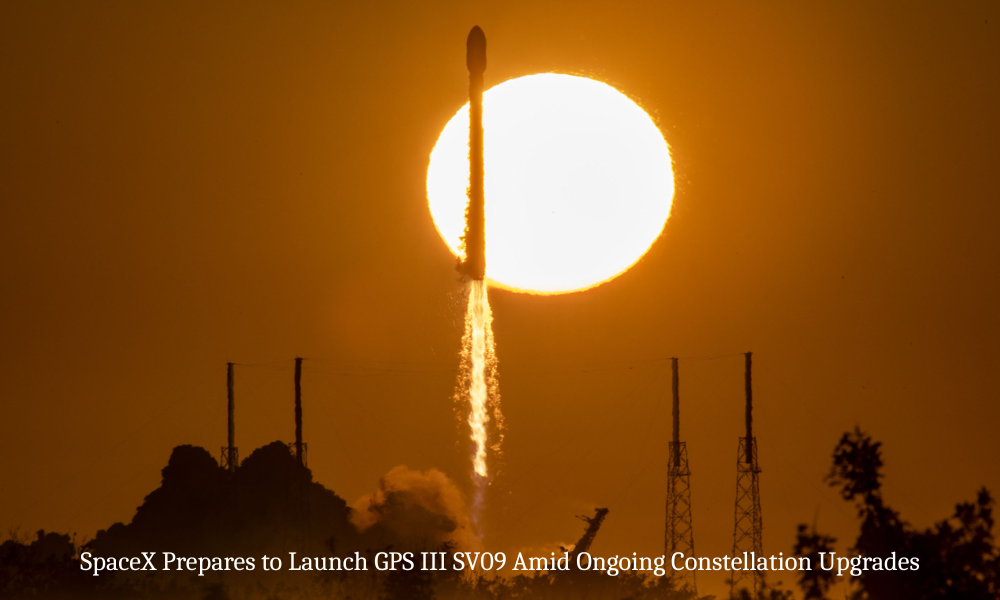
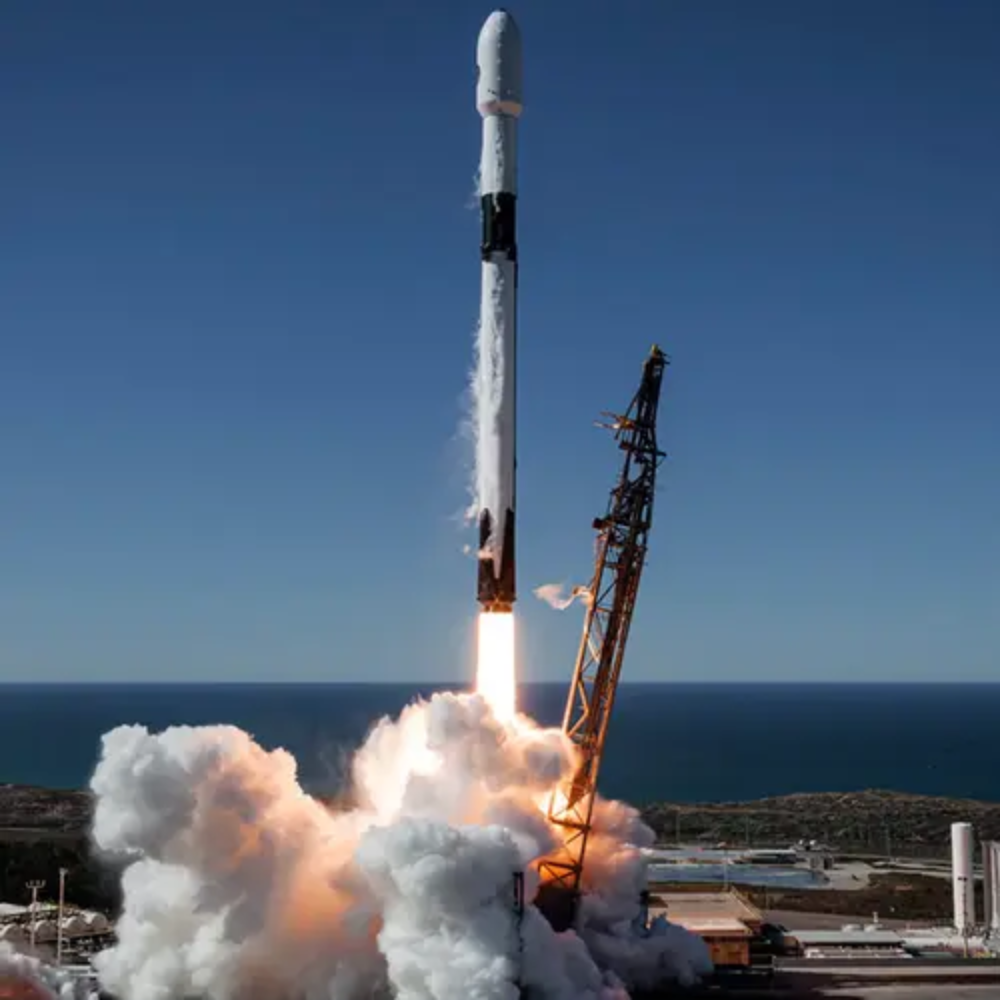
SpaceX is set to launch the GPS III SV09 satellite, marking another important milestone in the ongoing modernization of the United States’ Global Positioning System (GPS) constellation. This mission highlights the steady progress of GPS upgrades aimed at improving accuracy, reliability, and resilience for both military and civilian users worldwide. As SpaceX continues to play a key role in deploying next-generation navigation satellites, the launch of GPS III SV09 underscores the evolving partnership between commercial space providers and national security missions.
The GPS III satellite series represents the latest evolution of the decades-old GPS network. Originally launched in the late 1970s, the GPS constellation has become an invisible but essential part of modern life, supporting everything from smartphone navigation and ride-hailing apps to aviation, maritime operations, financial transactions, and emergency services. Recognizing the growing dependence on precise positioning, navigation, and timing (PNT) services, the U.S. Space Force initiated the GPS III program to significantly enhance system performance.
GPS III satellites are designed to deliver up to three times better accuracy compared to older GPS II satellites. They also feature stronger anti-jamming capabilities, improved signal strength, and greater resilience against interference. GPS III SV09 (Space Vehicle 09) is one of the final satellites in this advanced series, helping to complete a new baseline for the constellation before the transition to even more advanced GPS IIIF satellites in the future.
SpaceX’s role in launching GPS III satellites reflects the broader transformation of the U.S. launch industry. Once dominated by traditional government contractors, national security space launches are increasingly being handled by commercial providers offering cost-effective and reliable services. SpaceX’s Falcon 9 rocket has become a proven workhorse for such missions, demonstrating high reliability, rapid turnaround, and the ability to reuse first-stage boosters.
The GPS III SV09 mission is expected to use a Falcon 9 rocket, continuing SpaceX’s track record of successfully delivering GPS payloads to orbit. Previous GPS III launches by SpaceX have showcased precision insertion into medium Earth orbit (MEO), a critical requirement for navigation satellites that must maintain stable, carefully calibrated orbits.
GPS III SV09 will be deployed into medium Earth orbit, approximately 20,200 kilometers above the Earth’s surface. This altitude allows GPS satellites to provide global coverage, with at least four satellites visible from any point on Earth at a given time—essential for accurate positioning calculations.
After launch, the satellite will undergo a series of on-orbit tests and checkouts to ensure all systems are functioning as intended. Once certified, SV09 will be integrated into the operational GPS constellation, replacing older satellites and enhancing overall system performance. This gradual replacement strategy ensures continuity of service while steadily improving capabilities.
One of the most significant advantages of the GPS III satellites is improved accuracy. For civilian users, this means more precise navigation, better mapping, and enhanced performance for applications such as autonomous vehicles, precision agriculture, and urban mobility. Even small improvements in GPS accuracy can translate into major benefits for industries that rely on centimeter-level positioning.
For military users, GPS III offers enhanced security and resilience. The satellites support stronger, more robust signals that are harder to jam or spoof, a critical feature in contested or hostile environments. GPS III also lays the groundwork for the Military Code (M-code), which provides encrypted signals designed specifically for defense applications.
The launch of GPS III SV09 is part of a broader, long-term strategy to modernize and sustain the GPS constellation. The U.S. Space Force manages a complex architecture that includes space, ground, and user segments. Upgrading satellites is only one piece of the puzzle; ground control systems and user equipment must also evolve to fully leverage new capabilities.
In parallel with GPS III deployments, the Space Force is developing the GPS IIIF series, which will introduce additional enhancements such as search-and-rescue payloads, laser retroreflectors for precise orbit determination, and increased power for civilian signals. These future satellites will build on the foundation established by GPS III, ensuring that GPS remains the global gold standard for navigation and timing.
A notable aspect of SpaceX’s involvement in GPS launches is the use of reusable rockets. While early GPS missions required expendable launch vehicles, SpaceX has demonstrated that reused Falcon 9 boosters can meet stringent national security requirements. This approach reduces costs and allows for more flexible launch schedules, benefiting both the government and taxpayers.
Reusability also supports a faster launch cadence, which is increasingly important as space becomes more congested and competitive. The ability to quickly replace or augment satellites enhances the resilience of critical infrastructure like GPS.
Although GPS is operated by the United States, it serves as a global utility. Billions of users worldwide rely on GPS signals daily, often without realizing it. Upgrades like GPS III SV09 help maintain trust in the system’s accuracy and availability, especially as alternative global navigation satellite systems—such as Europe’s Galileo, China’s BeiDou, and Russia’s GLONASS—continue to advance.
By investing in GPS modernization and leveraging commercial launch providers like SpaceX, the U.S. reinforces its leadership in space-based navigation while contributing to global economic stability and technological progress.

As SpaceX prepares to launch GPS III SV09, the mission symbolizes more than just another satellite deployment. It represents the convergence of advanced satellite technology, commercial launch innovation, and long-term strategic planning. With each successful launch, the GPS constellation becomes more capable, resilient, and future-ready.
The continued upgrade of GPS ensures that this critical system will support emerging technologies—from autonomous transportation to smart infrastructure and advanced defense systems for decades to come. In this context, the launch of GPS III SV09 is a vital step forward, reinforcing the reliability of a system that has become fundamental to modern life.
With strong business writing skills, Hemangi focuses on clear, actionable content.