Controlled Vulnerability
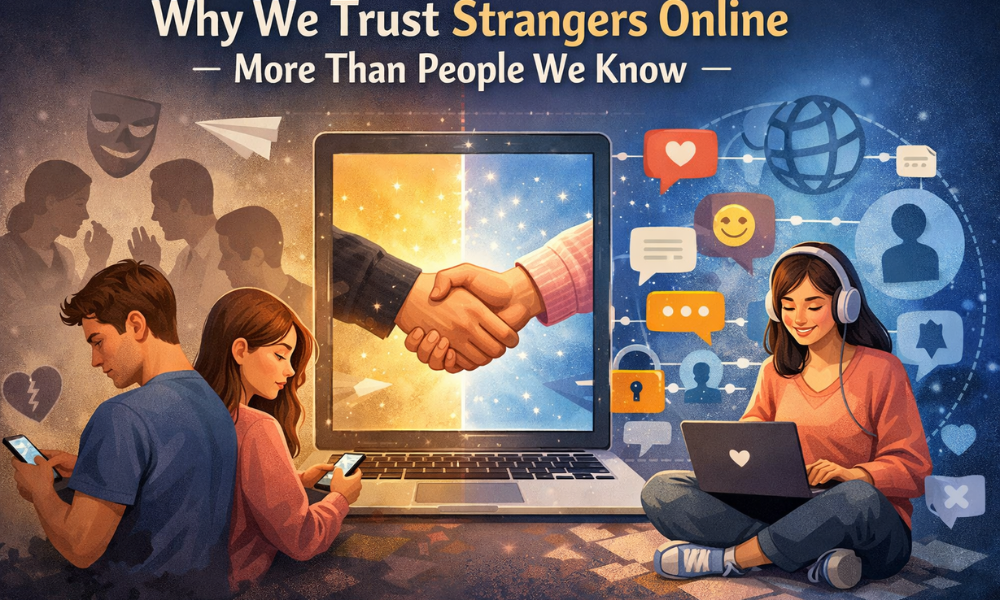
Trust is closely tied to vulnerability, but vulnerability feels safer when it is controlled. Online interactions allow people to choose how much they share, when they respond, and when they withdraw. This control reduces emotional risk.
In real life, conversations happen in real time, often requiring immediate responses. Online, we can pause, reflect, and edit our thoughts. This ability to regulate vulnerability helps individuals open up gradually, building trust at their own pace.
The Illusion of Listening
Online communication often feels more attentive than face-to-face conversations. Messages are read carefully, responses are thoughtful, and people appear fully present. In contrast, real-life conversations are filled with distractions—phones, interruptions, and divided attention.
This focused engagement creates the illusion of deep listening. When someone responds thoughtfully to our messages, we feel heard and valued. Trust grows when we believe someone is truly paying attention, even if the interaction is brief or anonymous.
Lower Emotional Stakes
With familiar faces, trust carries emotional weight. Betrayal, misunderstanding, or disappointment can have lasting consequences. This risk makes people cautious, even defensive.
Online strangers carry lower emotional stakes. If trust is broken, the loss feels manageable. This low-risk environment encourages experimentation with openness. Over time, repeated positive interactions reinforce the belief that online strangers are more trustworthy.
Projection and Idealization
When we know someone personally, we see their flaws, inconsistencies, and contradictions. Online strangers, however, are often viewed through limited interactions. We fill in the gaps with idealized assumptions.
This projection makes strangers appear kinder, wiser, or more understanding than they may actually be. Familiar faces are complex and imperfect, while online strangers exist as carefully curated fragments. This imbalance can make strangers seem more trustworthy by comparison.
Validation Without Obligation
Online strangers often offer validation without demanding anything in return. They listen, advise, and empathize without expectations. Familiar relationships, however, involve obligations—emotional labor, time, and reciprocity.
This absence of obligation makes online support feel purer. Trust develops when people feel supported without pressure, even if the connection is temporary.
The Role of Digital Culture
Digital culture encourages openness. Platforms reward sharing, vulnerability, and emotional expression. Stories, confessions, and personal struggles receive attention and affirmation. Over time, this normalizes trust in digital spaces.
Conversely, real-life environments often discourage vulnerability. Social norms prioritize strength, composure, and privacy. This contrast makes online spaces feel safer for emotional expression and trust-building.
The Hidden Risks
While trusting online strangers can feel comforting, it is not without risk. Anonymity can also enable deception. Not everyone online is honest, and misplaced trust can lead to emotional harm or manipulation.
Recognizing why online trust feels easier helps us navigate digital relationships more wisely. Trust should be balanced with discernment, both online and offline.
Relearning Trust in Familiar Faces
Understanding this phenomenon invites reflection rather than blame. It highlights unmet emotional needs, communication gaps, and the importance of safe spaces. Perhaps the solution is not to distrust online strangers, but to cultivate the same openness, empathy, and non-judgmental listening in real-life relationships.
When familiar faces offer the same safety and understanding we find online, trust can be rebuilt where it matters most.