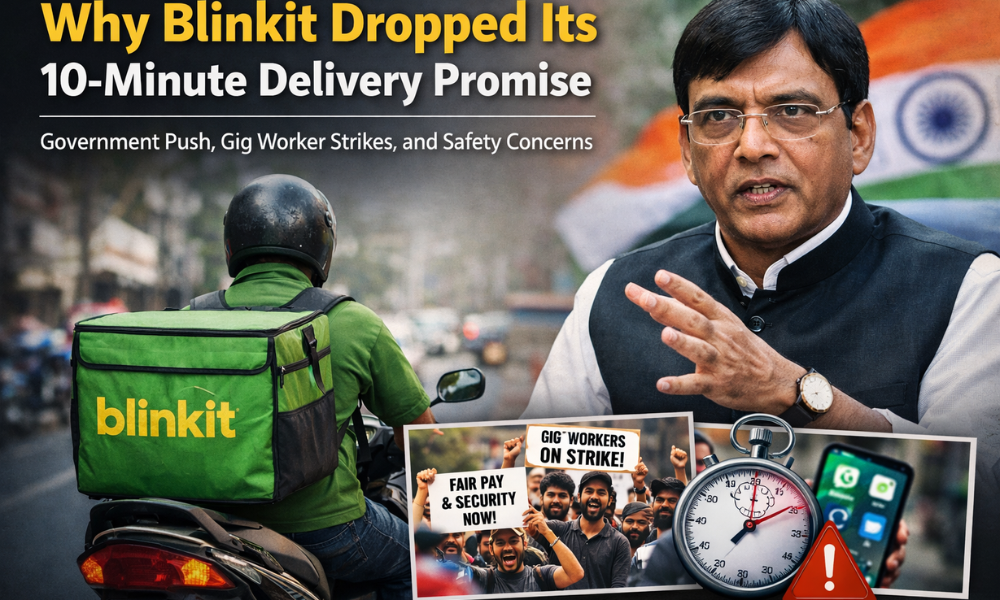
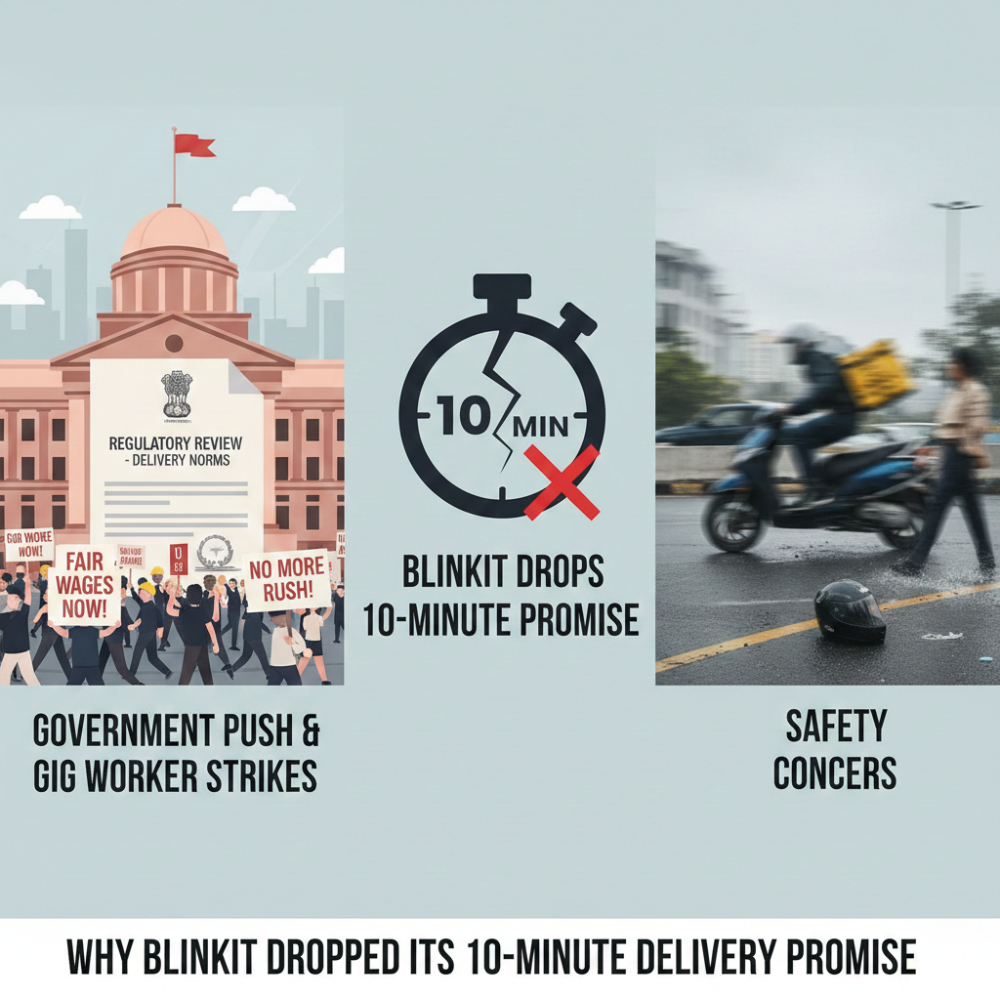
Ultra-fast delivery has been one of the characteristic features of India’s quick commerce boom, with platforms racing against each other to be the fastest and most convenient. However, with growing concerns about gig workers’ safety and working conditions, fixed timelines for deliveries have come under question. After the Indian government’s intervention and nationwide strikes by gig workers towards the end of December, Blinkit has silently shed the 10-minute delivery branding. This silent rebranding indicates a shift in the way quick commerce companies will brand their services, though operations related to delivery will mostly remain unchanged.
Blinkit removed references from its app interface, advertising, promotional campaigns, and social media communications to the “10-minute delivery” promise, which has been the brand’s icon since its inception. This change became evident on Tuesday afternoon when users opened the app and there were no longer any mentions of the “10-minute delivery” promise, signalling that Blinkit has decided to make a subtle but conscious shift in their messaging. According to sources, although the company has removed any reference to a 10-minute timeline for deliveries, they don’t necessarily mean that deliveries will take longer. The company is simply choosing to no longer publicly commit to fixed timelines for delivery. The decision represents a broader effort on behalf of Blinkit to avoid messaging that could be perceived as pressuring delivery partners into rushing or taking risks with their deliveries. Through changing the way, they position their services, Blinkit is responding to increasing scrutiny over delivery pressure, but will continue to operate under the same system design based on logistics efficiency and proximity to stores.
The End of Guaranteed Delivery Times Due to the Pressure from the Government
After Intervention from the Union Labour Minister Mr. Mandaviya, who engaged with various companies providing food delivery and Quick Commerce, the guaranteed delivery times have been removed from branding. The Government had concerns that if companies continued to provide guaranteed delivery times, then it would create pressure on the workers and could lead to unsafe working conditions. The Minister met with various companies like Blinkit, Zepto, Swiggy and Zomato, and spoke with them about removing guaranteed delivery times from their marketing and branding. The companies have stated that they have changed how speedily they deliver, on how they operate their delivery systems, however, the Government is still concerned that providing the public with a guarantee regarding delivery times may lead to creating pressures on the workers. All companies in attendance are reported to have assured the Government that they will be modifying their marketing communications in a way that better reflects the current proposals of the Government regarding Worker Protections among other labour rights.
The Shift of How We Think About Delivery and Teamwork
The change in branding for gig and delivery workers happened because of strikes around the country that took place on December 25 and December 31. Worker unions accused these services of creating unsafe delivery models, cutting earnings, and offering limited social security protections for workers. In several cities, deliveries continued mostly as usual during New Year’s Eve, but the strikes did raise public awareness and government scrutiny over the conditions in which gig workers work. The strikes generated additional concern that the demand for super-fast delivery may create unnecessary pressures on delivery workers. While platform executives, such as CEO Deepinder Goyal of Zomato, had defended super-fast delivery by arguing for the use of insurance and with respect to how the operations were designed, the strikes illustrated that significant portions of their workforce are unhappy. As a result, the strikes were successful in pushing the government to increase engagement with gig delivery platforms.
How Quick Commerce Firms Will Respond to Future Changes
Quick commerce businesses are changing the way they market their service offerings by eliminating a set delivery timeframe from their marketing messages. This does not imply that these businesses have changed the way they fulfil their orders, nor does it mean that these businesses do not meet their promised delivery times. The primary focus of these marketing messages is no longer on time commitments but instead is now compliant with new governmental and safety regulations. As such, quick commerce businesses will continue to experience pressure from various levels of government agencies, consumers, and employees regarding the need for gig worker safety. Companies will be continuing to work with various levels of government as regulations for labour codes are developed. The safety and welfare of gig workers will continue to be scrutinised by both the media and government agencies. Thus, this new strategy is a reflection of how companies are trying to balance operational efficiency with pressures from consumers, state and federal authorities, and government agencies.
Conclusion
The decision by Blinkit to abandon its identity associated with delivery within 10 minutes sets a new trend in how delivery services by quick commerce companies choose to advertise speed on any given market or social setting. The new wave of abandoning advertisements regarding speedy delivery was sparked by government interference and followed by nationwide worker strikes, thereby indicating an increasing trend in worry regarding delivery pressure and worker safety concerns. Even if services proceed on current terms, it’s clear that firms have started rethinking any form of tied timelines in their communication.