India’s space programme is set to begin 2026 with a major milestone. The Indian Space Research Organisation (ISRO) will kick off its launch calendar with the PSLV‑C62 mission on January 12, 2026, marking the space agency’s first orbital launch of the year. This mission is not just a routine liftoff, but a high‑profile endeavour that highlights India’s advancing capabilities in space surveillance, global partnerships, and technological innovation.
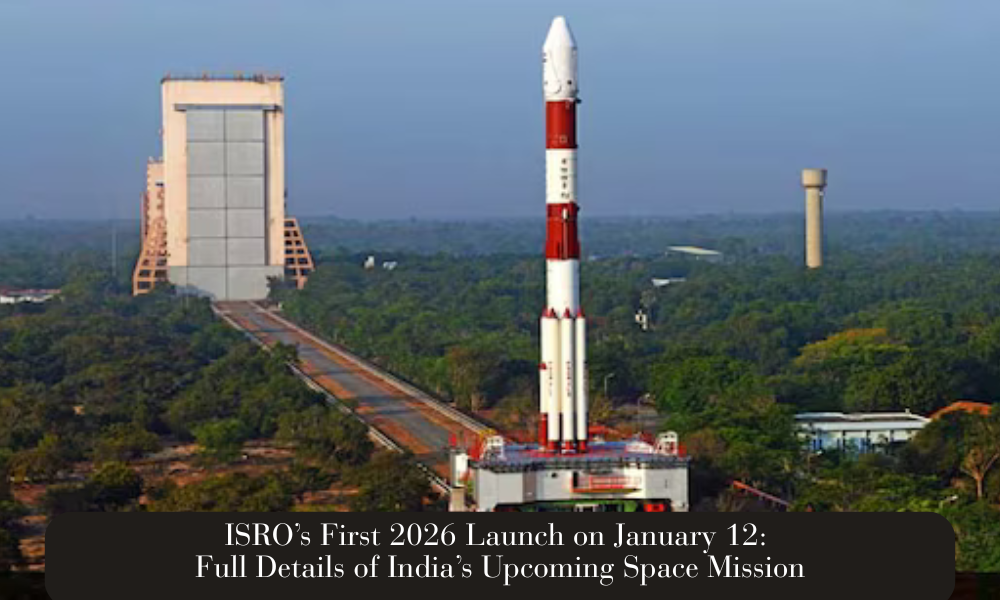
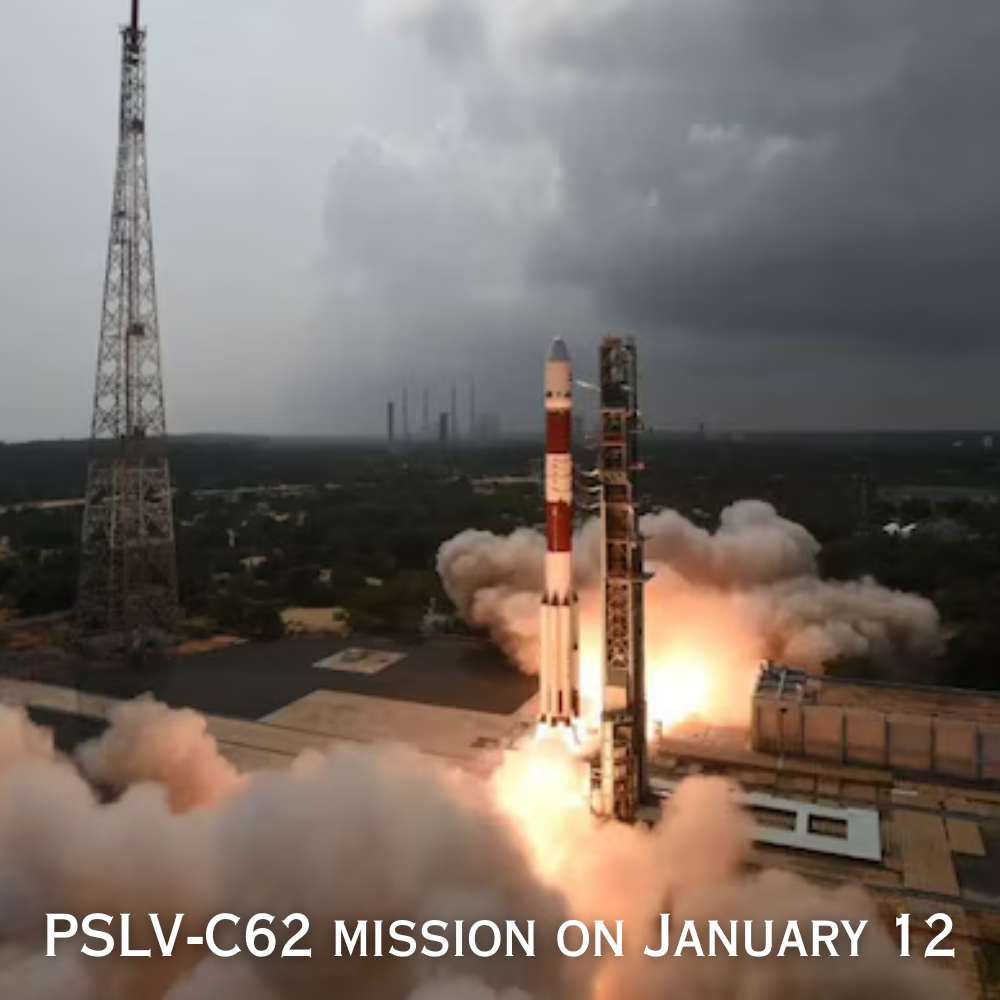
Scheduled for 10:17 AM IST, the PSLV‑C62 rocket will lift off from the First Launch Pad at the Satish Dhawan Space Centre (SDSC) in Sriharikota, Andhra Pradesh. The event is expected to attract attention from scientists, space enthusiasts, and international partners alike — reinforcing India’s growing reputation as a reliable launch provider and innovator in space technology.
The Polar Satellite Launch Vehicle (PSLV) is one of ISRO’s most trusted workhorse rockets, responsible for launching scores of satellites into orbit since the early 1990s. The upcoming mission — designated PSLV‑C62 — will be the 64th flight of this versatile launch vehicle and its first of 2026.
PSLV‑C62 will use the DL variant of the rocket, meaning it features two strap‑on boosters that provide additional thrust during the initial phase of lift‑off. PSLV’s design reliability and flexibility for multiple payload deployments have made it a favourite for satellite launches, both for domestic and international customers.
At the heart of the January 12 mission lies the EOS‑N1 satellite, also known by the codename Anvesha. Developed by the Defence Research and Development Organisation (DRDO), this is a high-resolution Earth observation satellite with strategic applications for India’s national security and surveillance systems.
EOS‑N1 is designed to capture detailed images of Earth’s surface, providing critical data for defence, disaster response, and environmental monitoring. With advanced imaging capabilities, it is expected to significantly augment India’s space-based observation infrastructure.
This mission underscores a key strategic priority for India — using space assets not just for scientific exploration, but as indispensable tools for national security and decision-making.
In addition to the primary payload, PSLV‑C62 will carry a fleet of co‑passenger satellites, showcasing ISRO’s growing role in global space collaboration and commercial launch services. Sources confirm that 18 additional satellites are on board, including both domestic and international payloads.
Among these are:
Commercial satellites from startups and research organisations across countries such as the UK, France, Brazil, Mauritius, Singapore, Luxembourg, the UAE, and the United States.
A technology demonstrator called the Kestrel Initial Demonstrator (KID), developed by a Spanish aerospace startup, which will remain attached to the PSLV’s fourth stage during orbit insertion.
A startup-developed orbital servicing demonstration payload, AayulSAT, developed by Bengaluru‑based OrbitAID Aerospace. This innovative technology aims to test on-orbit satellite refuelling and servicing technologies, potentially adding a new frontier to India’s space capabilities.
Space experts say these ride‑share payloads reflect a broader trend: ISRO is increasingly collaborating with international partners and private sector innovators, providing versatile launch capability uniting scientific, commercial, and strategic goals.

One of the most exciting aspects of this mission lies in the inclusion of innovative technologies that could shape the future of space exploration and utilisation. The AayulSAT payload, for instance, represents India’s first test of on-orbit refuelling and servicing, a rapidly emerging field in global space infrastructure. Such technologies are essential for enhancing satellite lifespans and improving the sustainability of space operations — a priority in international space policy circles today.
By hosting payloads like these, ISRO demonstrates that it is not only a launch provider but also a platform for cutting-edge research and commercial space technology development. These initiatives help build a vibrant space economy in India, involving startups, academic institutions, and international collaborators.
ISRO has invited the public to witness the launch from the Launch View Gallery at SDSC SHAR, Sriharikota. Interested visitors must register online in advance — providing government-issued ID and contact details to ensure secure and organised access to the space centre’s viewing facilities.
Such public outreach not only enhances transparency but also fuels greater enthusiasm and participation in India’s space endeavours. The launch is expected to draw large crowds of space enthusiasts, school groups, researchers, and members of the media.
While PSLV‑C62 will be the first orbital launch of 2026, it’s only the beginning of what promises to be an ambitious year for India’s space ambitions. ISRO’s broader roadmap includes major missions such as:
The Gaganyaan human spaceflight programme, with test flights scheduled throughout 2026 as the country moves closer to launching astronauts into orbit.
Collaborations like NISAR and commercial missions supporting international partners.
These missions reflect a strategic shift: India is no longer just launching satellites — it is becoming a global partner in space exploration, science, and technology. This launch, with its blend of strategic, commercial, and experimental payloads, is a microcosm of that evolving vision.
ISRO engineers and technical teams are in the final stages of launch preparations. The PSLV rocket, launch vehicle stages, and payloads have undergone integration and systems checks at the launch site. Observers expect the spacecraft to remain on schedule, barring any last-minute technical or weather-related delays, which are always possible in space missions.
The PSLV‑C62 mission is expected to reaffirm PSLV’s reputation as one of the world’s most reliable and versatile satellite launch vehicles, enabling India to continue its strong presence in the global space market. With the successful deployment of satellites for multiple countries and experimental technologies that push boundaries, this launch could well set the tone for a landmark year for Indian space exploration.
In summary, the ISRO PSLV‑C62 mission on January 12, 2026 isn’t just a launch — it’s a statement about India’s space capabilities, partnerships, and aspirations. From strategic Earth observation to global collaborations and innovative technologies like on-orbit servicing, this mission encapsulates the diverse directions in which India’s space programme is headed — and it all begins with a rocket rising above Sriharikota on a January morning.
Hemangi writes articles that support business goals with clarity and precision.