A Land Where Rain Shapes Life
Cherrapunji and Mawsynram are located in the East Khasi Hills district of Meghalaya, sitting atop the southern edge of the Khasi Hills plateau. Clouds drift lazily through villages, rainfall nourishes the land almost year-round, and the rhythm of life follows the patterns of nature rather than the clock.
While Cherrapunji once held the title of the wettest place on Earth, Mawsynram now officially holds that distinction, receiving an astonishing amount of rainfall annually. Yet, despite this constant downpour, these places are not gloomy. Instead, the rain gives birth to vibrant greenery, fertile soil, and landscapes that feel almost otherworldly.
Cherrapunji: Where Waterfalls Touch the Sky
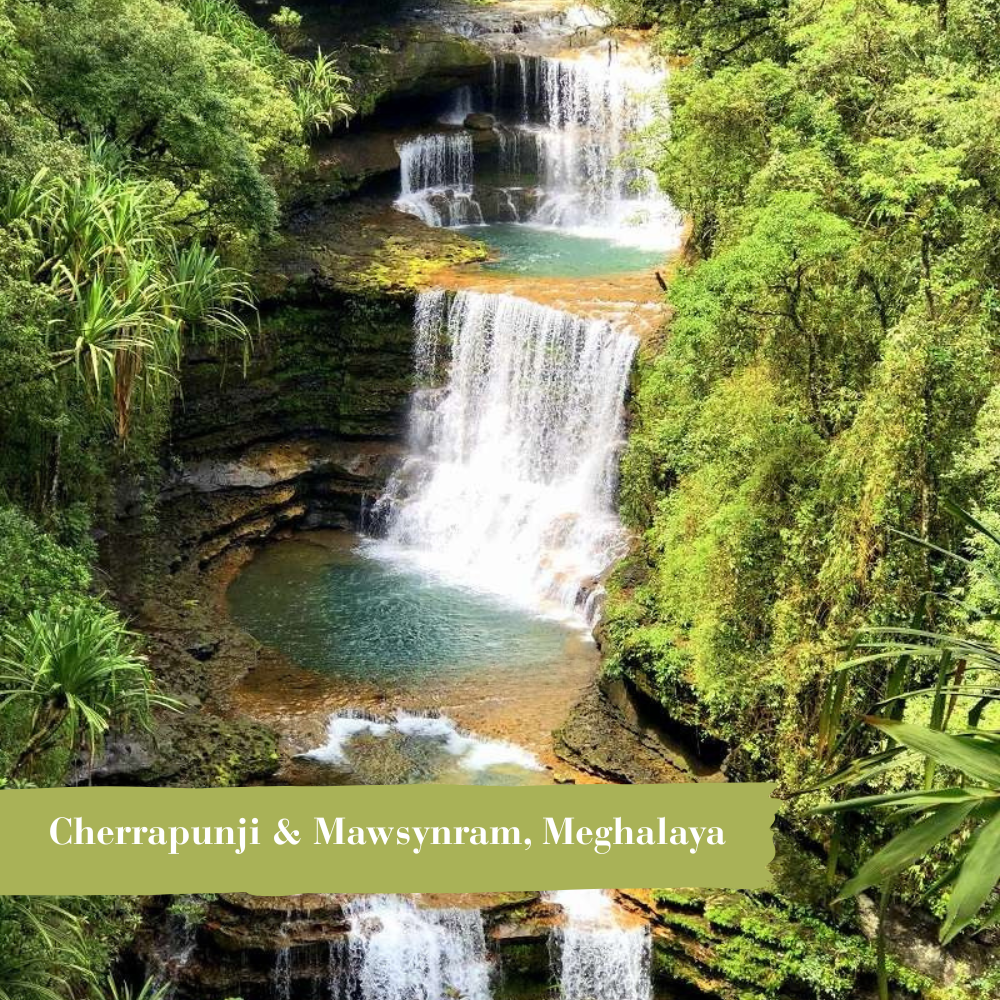
Cherrapunji, also known locally as Sohra, is famous for its dramatic cliffs, deep gorges, and spectacular waterfalls. During the monsoon season, the region transforms into a paradise of flowing water, with waterfalls tumbling down rocky cliffs in endless streams.
Some of the most captivating sights in Cherrapunji include powerful waterfalls, lush valleys like Nohkalikai, and panoramic viewpoints that offer endless views of Bangladesh plains below. The mist-covered hills, combined with the roar of falling water, create a magical atmosphere that feels untouched by modern chaos.
Beyond scenic beauty, Cherrapunji holds historical significance as one of the earliest centers of education and Christianity in northeast India, adding cultural depth to its natural wonders.
Mawsynram: The Heart of the Monsoon
Just a short distance from Cherrapunji lies Mawsynram, a quiet village that receives more rainfall than any other place on Earth. Unlike bustling tourist towns, Mawsynram remains peaceful and deeply connected to traditional Khasi life.
Here, rain is not an obstacle but a companion. Homes are built to withstand heavy showers, and locals skillfully adapt their daily routines to the weather. Clouds roll in and out of the landscape, often creating scenes where visibility changes dramatically within minutes, offering photographers endless opportunities.
Mawsynram is also known for its unique natural caves, grasslands, and viewpoints that reveal the power of nature in its purest form.
Living Root Bridges: Nature’s Architecture
One of the most fascinating attractions near Cherrapunji and Mawsynram is the living root bridges. Crafted over generations by the Khasi tribes, these bridges are made by guiding the roots of rubber fig trees across streams and rivers. Over time, the roots strengthen and form sturdy, natural bridges that can last for centuries.
Walking across a living root bridge is a humbling experience. It represents harmony between humans and nature, showcasing sustainable engineering long before modern technology existed. These bridges are not only functional but also symbolic of Meghalaya’s deep respect for the environment.