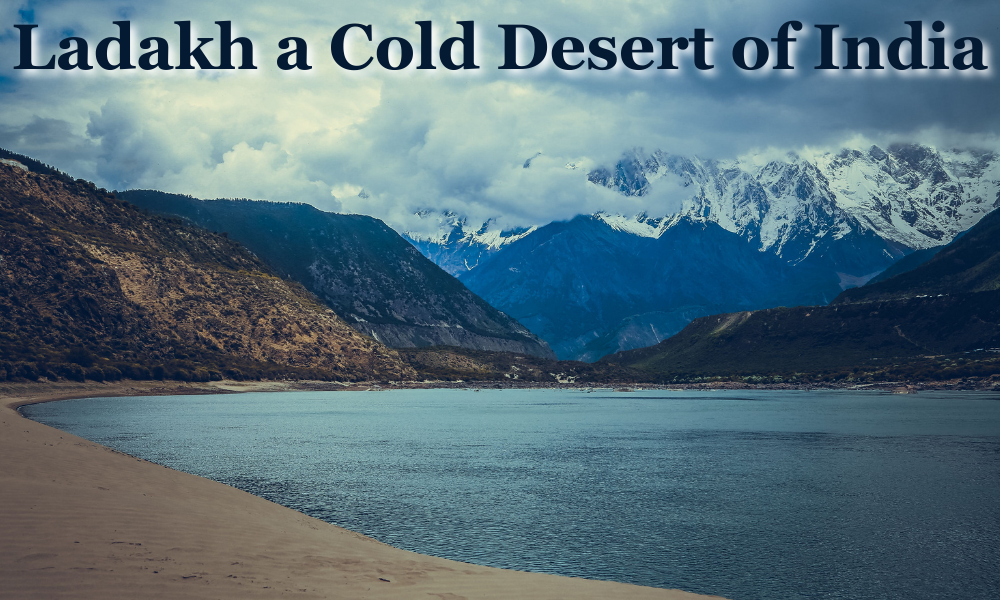
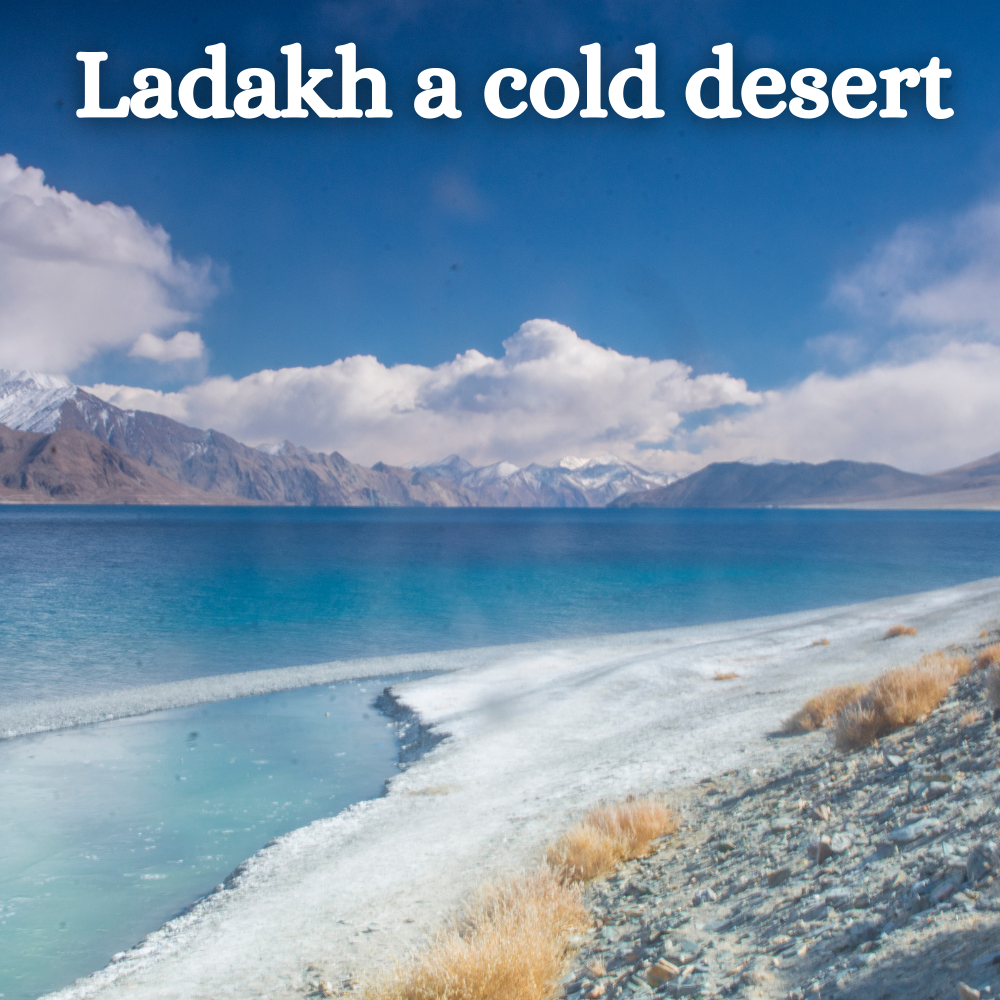
Ladakh is a unique region of India which is known for its high mountain ranges and deep river valleys. Ladakh is one of the highest regions due to its natural characteristics of having high mountain passes. Ladakh features lush deep valleys and mountain passes with rivers, lakes making it a visually pleasing land.
Bordering the Tibet region in the east, Himachal Pradesh to the south with gilgit baltistan to the west, ladakh lies in between the beautiful landscape of high mountains.
Lying between Himalayan and Karakoram mountain ranges it creates a stunning and breathtaking view of the region.
People often wonder, Why Ladakh is called Cold Desert of India ? What Makes it Cold
Ladakh is known as the cold desert of India as it is located at a highly elevated location with the climate being dry and cold.
A cold desert is a dry atmosphere area which has a very low amount of precipitation and very little amount of vegetation area. It is characterized by cold temperatures which stay all year with sub zero temperature and snowfall in the winter season. Some other characteristics of a cold desert include thin air, fast winds, and low amount of flora and fauna which is adapted according to the climate.
There are many factors which influence to make Ladakh a cold desert. These factors include,
Its highly elevated location is around 3000 meters above sea level.
Low temperature which stems from its highly elevated location with temperature dropping to -20°c to -40°c in the winter season.
Blocked monsoon: As the region is surrounded by the Himalayas, the mountain ranges block the monsoon winds and ultimately block the region from rainfall.
The low amount of moisture in the wind makes the region receive less than 4 inches of rain annually.
Geography and Climate of Ladakh For students learning geography, especially in classes 5, 6, and 7, this question often comes up in textbooks: Why Ladakh is called cold desert of India? What makes it cold? Class 5–6–7 answer with reason is simple, it is both dry like a desert and cold due to its altitude and climate.
The geography of Ladakh consists of high mountains which lie between the Himalayan and Karakoram mountain ranges, with river valleys and deep mountain passes creating a landscape of cold desert with dry air and extremely low rainfall. This creates a major fluctuation in temperatures. All of these factors make the region of Ladakh driest and coldest region of India.
The high altitude which is more than 3000m from sea level makes the region of Ladakh prone to thin air and dry climate. It is surrounded by Karakoram mountain range and Zanskar range which block the region from moisture laden air which makes the area experience very little amount of rain in a year.
The atmosphere of Ladakh is cold and dry as it is located at a highly elevated location which creates a rain shadow in its climate. Ladakh experiences a very low rainfall, with approximately 100 mm of precipitation in a year. The region is mostly covered in snow in the winter season and experiences rare and localised rainfall in the months of Summer. With minimal and low amounts of rainfall and heavy winter snow makes the region scarce in water supply. The months of Summer which are May – September experience the most precipitation. These summer rains are very rare and intense. Due to recent climate change, temperature in this region has increased which has made the area more prone to rainfall in the months of summer.

Ladakh experiences an intense amount of variations in season ranging from cool summers to harsh and rigid winters which bring heavy snowfalls along with it. The shoulder season which lasts from August to October comes with cold and clear weather before the harsh winters come into play. Major characteristics include extreme variation in temperature, low amount of precipitation and dry weather due to its high altitude location which makes the summer season best suitable for tourism. Summer becomes the peak season for travel and tourists, while the moderate or monsoon season offers clear skies and comfortable weather with occasional rain showers. Weather in winter becomes harsh and cold as the temperature drops to -20 degree Celsius to -40 degree Celsius.
People of Ladakh are humble and kind. The lifestyle is surrounded by agriculture and rearing of sheep and yak and the economy is heavily based on tourism. People here live a very disciplined life. The crops cultivated here include wheat, barley and vegetables grown in valleys which protect them from the region’s harsh climate. The people here mainly rely on livestock and their production of wool. With the harsh atmosphere of cold and dry climate the people have begun to develop a very strong cultural heritage which is the mix of Buddhist and Islamic influence. The people are kind and humble.
Recently there has been a major change in the climate of Ladakh. Ladakh which is called the cold desert of India used to experience little to no amount of rain. But this year this union territory has experienced 4 times more the amount of rain it usually experiences. According to Kargil municipal committee Ladakh comes in the Himalayan rain shadow region. Due to the presence of Himalayan mountain ranges the strong winds of Himalayas attract the monsoon wind which makes the region dry and cold. But due to recent climate change there has been an increase in temperature due to which this cold desert of Ladakh has experienced four times more the amount of rainfall than it usually experiences in a year
Ladakh, which is called the “cold desert of India,” is a land of stark contrasts, where high mountains meet deep valleys and the silence speaks louder than words. Its unique climate, with extreme cold, low rainfall, and harsh living conditions, makes it stand apart from the rest of the country. Understanding why Ladakh is known as a cold desert gives us insight into its geography.
iPhone 17 Made in India: Apple Expands Manufacturing with Huge Export Push
Nidhi writes insightful content to help brands grow and audiences stay informed.